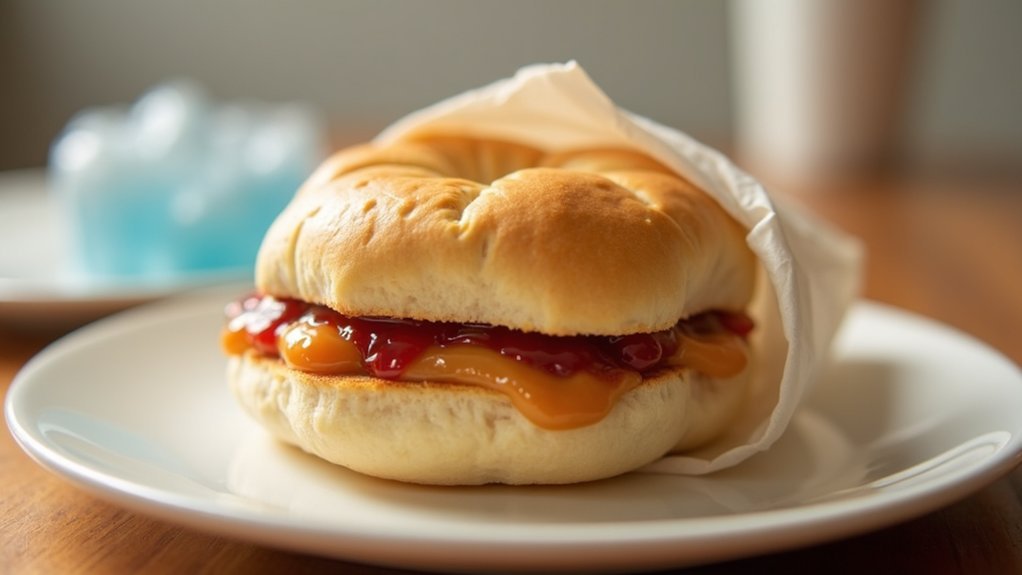

Yes, you can eat Uncrustables after wisdom teeth removal. They’re soft and easy to chew, which makes them perfect for your recovery diet. Make sure to keep them at cool or room temperature to avoid irritating your extraction sites. Stick to soft foods like these during the first week to minimize discomfort. As you heal, you can gradually reintroduce more foods. For further details on what to eat and avoid, continue exploring the recovery guidelines.
Key Takeaways
- Uncrustables are a soft food option, making them suitable for consumption after wisdom teeth removal.
- Maintain Uncrustables at cool or room temperature to avoid irritating extraction sites.
- They are easy to chew and provide nutrition during the recovery process.
- Monitor your comfort levels while eating Uncrustables and adjust as needed.
- Always follow your surgeon’s dietary guidelines for optimal healing.
Overview of Wisdom Teeth Removal and Recovery
When you undergo wisdom teeth removal, you’ll likely experience a variety of recovery challenges.
Wisdom teeth removal can lead to various recovery challenges that require careful attention and care.
Wisdom teeth extraction, often necessary in your late teens or early twenties, can lead to discomfort and inflammation post oral surgery. The extraction process varies, affecting your healing time.
In the first week, you’ll need to focus on soft foods to avoid irritating your tender gums. Options like soups and yogurt are ideal for promoting healing.
Additionally, maintaining consistent oral hygiene and adhering to your oral surgeon’s instructions is essential for minimizing risks of inflammation and ensuring a smoother recovery journey.
Recommended Foods to Eat After Wisdom Teeth Removal
After wisdom teeth removal, choosing the right foods plays an essential role in your recovery. Soft foods are vital for minimizing discomfort as you heal from dental surgery.
Uncrustables, filled with peanut butter and jelly, are an excellent option since they’re easy to chew and provide necessary protein and carbohydrates. Make sure they’re at a cool or room temperature to protect your extraction sites.
Alongside Uncrustables, consider incorporating other soft foods like yogurt, mashed potatoes, and smoothies to maintain a balanced normal diet.
Always monitor your comfort levels when consuming these foods, adjusting as needed for the best recovery.
Foods to Avoid After Wisdom Teeth Removal
To guarantee a smooth recovery after wisdom teeth removal, it’s crucial to avoid certain foods that can hinder healing or cause discomfort.
Steer clear of hard, crunchy, or chewy solid foods for at least two weeks, as they can disrupt the healing process. Foods to avoid include crusty bread rolls, chips, and popcorn, which can irritate surgical sites.
Additionally, spicy foods may promote inflammation and pain, while acidic foods like citrus fruits and tomato-based products can exacerbate soreness.
When Can I Start Eating Normal Food After Wisdom Teeth Extraction?
While you might be enthusiastic to return to your normal diet, it is essential to prioritize your healing process following wisdom teeth extraction. During the first week, focus on soft foods to avoid irritating the surgical site. After about 7 to 10 days, you can start reintroducing semi-soft foods based on your comfort levels. However, avoid hot, crunchy, or chewy items for at least two weeks. Always consult your oral surgeon for tailored advice on when to resume normal dietary habits.
| Timeframe | Recommended Foods |
|---|---|
| First Week | Soft Foods |
| 7-10 Days Post | Semi-Soft Foods |
| 2 Weeks Post | Soft Foods |
| Beyond 2 Weeks | Normal Foods |
Other Helpful Routines for Recovery
Recovery from wisdom teeth removal involves more than just dietary adjustments. Incorporate soft foods like Uncrustables, ensuring they’re consumed at room temperature to avoid irritation.
Gradually introduce these items after a couple of days to maintain nutrition without discomfort. Pairing Uncrustables with smooth, nutrient-rich options like yogurt or smoothies can enhance your recovery by supplying essential vitamins and minerals.
Additionally, establish a routine of gentle oral hygiene practices to promote healing and greatly aid in infection prevention. This holistic approach, combining soft food consumption and diligent oral care, can optimize your recovery journey effectively.