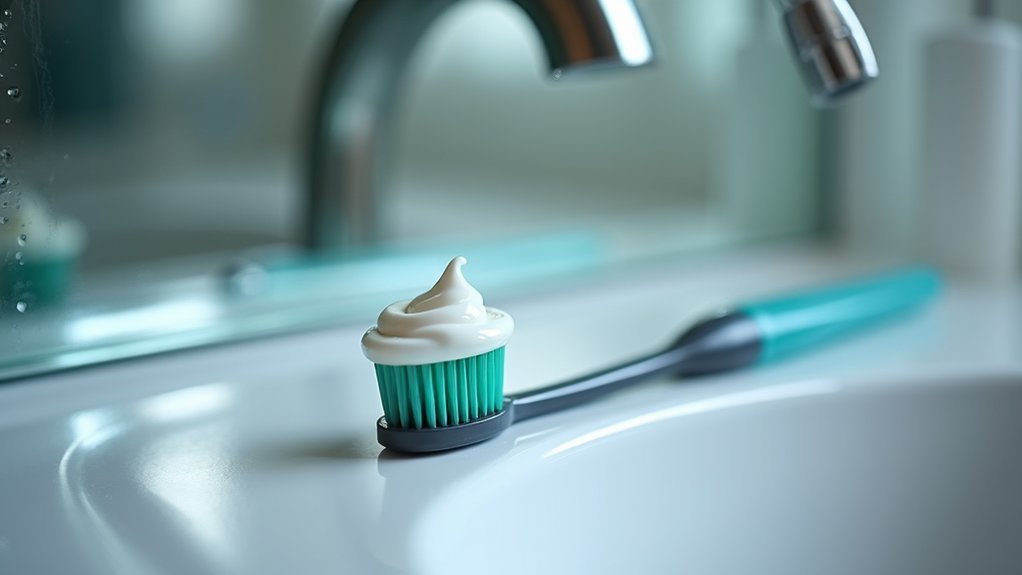

Leaving fluoride toothpaste on your teeth overnight can enhance enamel remineralization and offer extra protection against cavities. However, there are risks, such as potential enamel erosion and increased sensitivity. It’s vital to manage these concerns, especially for children, who might swallow excess toothpaste. For effective use, consider brushing properly and maintaining a routine. If you want to verify you’re using fluoride correctly, you’ll want to explore best practices and additional tips for ideal oral hygiene.
Key Takeaways
- Leaving fluoride toothpaste on teeth overnight can enhance enamel remineralization and provide extended protection against cavities.
- Prolonged exposure to fluoride may increase the risk of enamel erosion and tooth sensitivity.
- Children should avoid swallowing toothpaste, as it can lead to fluoride toxicity.
- Continuous contact with fluoride may irritate gums and disrupt oral bacteria balance.
- It’s best to follow dental professionals’ advice about overnight applications for individual dental health needs.
Understanding Fluoride Toothpaste and Its Purpose
Fluoride toothpaste plays an essential role in maintaining your dental health, as it contains fluoride, a mineral that strengthens tooth enamel and helps prevent decay.
By enhancing remineralization, fluoride makes your teeth more resistant to acid attacks from plaque and sugars. To maximize its effectiveness, brush for at least two minutes, allowing adequate contact time, and avoid rinsing immediately after brushing.
However, be cautious of fluoride toxicity, especially in children; use a pea-sized amount and supervise them during brushing.
Potential Benefits of Leaving Fluoride Toothpaste Overnight
When considering ways to enhance your dental health, leaving fluoride toothpaste on your teeth overnight might offer significant benefits.
Prolonged exposure to fluoride toothpaste can boost enamel remineralization, strengthening your teeth against decay. This extended contact may also provide added protection from acid attacks caused by plaque bacteria and sugars, reducing your risk of cavities.
Prolonged exposure to fluoride toothpaste enhances enamel remineralization, offering greater protection against decay and cavities.
Studies indicate that overnight fluoride exposure increases uptake by enamel, enhancing its resistance to demineralization. These benefits are particularly pronounced for individuals with higher decay risk factors, like a history of cavities or poor oral hygiene.
Just remember to balance these benefits with potential risks.
Risks Associated With Overnight Application of Fluoride Toothpaste
While the potential benefits of leaving fluoride toothpaste on your teeth overnight may seem appealing, it’s vital to be aware of the associated risks.
Prolonged exposure to fluoride can lead to enamel erosion, increasing tooth sensitivity and decay. In addition, children are particularly vulnerable to fluoride toxicity, which might cause nausea or abdominal pain if swallowed.
Continuous contact with fluoride toothpaste can irritate your gums, resulting in discomfort or inflammation. Moreover, it may disrupt the balance of oral bacteria, leading to plaque accumulation and gum disease.
Dental professionals recommend rinsing after brushing to minimize these risks effectively.
Best Practices for Using Toothpaste Effectively
To achieve ideal oral health, it’s crucial to adopt effective toothpaste usage practices.
- Brush for at least two minutes with fluoride toothpaste.
- Use a pea-sized amount to prevent enamel wear.
- Spit out excess toothpaste and avoid rinsing to enhance protective effects.
- Refrain from eating or drinking immediately after brushing to combat plaque buildup overnight.
Recommendations for Maintaining Optimal Oral Hygiene
Effective toothpaste use lays the foundation for maintaining ideal oral hygiene.
Brush twice daily with a pea-sized amount of fluoride toothpaste for at least two minutes to combat plaque and strengthen enamel. Floss daily before brushing to remove food particles that a toothbrush might miss, enhancing your oral health.
Brush twice daily with fluoride toothpaste and floss before brushing for optimal oral health.
To maximize fluoride absorption, avoid rinsing immediately after brushing; instead, wait 20-30 minutes. Schedule regular dental check-ups for professional cleanings and personalized advice.
Remember to replace your toothbrush every three to four months to prevent gum disease and guarantee effective cleaning, keeping your smile healthy and vibrant.