
Rotting baby teeth can indeed affect your child’s permanent teeth. Untreated cavities create an acidic environment that harms developing adult teeth, potentially leading to malformations or discoloration. Additionally, advanced decay may cause pain and sensitivity, complicating oral hygiene efforts. Early loss of baby teeth can also lead to misalignment as adjacent teeth shift. It’s essential to maintain healthy baby teeth to support your child’s long-term dental health. Discover more about preventing cavities and ensuring strong oral health.
Key Takeaways
- Rotting baby teeth can lead to serious complications for the development of permanent teeth.
- Untreated decay creates an acidic environment that harms the enamel of adult teeth.
- Malformations or discoloration in permanent teeth can result from decay in primary teeth.
- Bacteria from decayed baby teeth can spread, increasing risk for further dental issues.
- Early loss of baby teeth can cause misalignment due to shifting of adjacent teeth.
The Importance of Baby Teeth
Baby teeth play an essential role in your child’s development, serving not just as placeholders for permanent teeth but also as key players in chewing and speech.
By age three, your child typically has a full set of 20 primary teeth, which help guide the alignment of adult teeth. Healthy baby teeth are crucial for preventing spacing issues, ensuring permanent teeth emerge correctly.
Establishing good dental habits early on lays the groundwork for strong oral health and overall well-being. When baby teeth are healthy, they boost your child’s confidence in smiling and speaking, reinforcing the importance of caring for those precious primary teeth.
How Cavities in Baby Teeth Impact Permanent Teeth
When cavities in primary teeth go untreated, they can lead to serious complications for your child’s permanent teeth.
Untreated cavities in primary teeth can cause significant issues for your child’s permanent teeth.
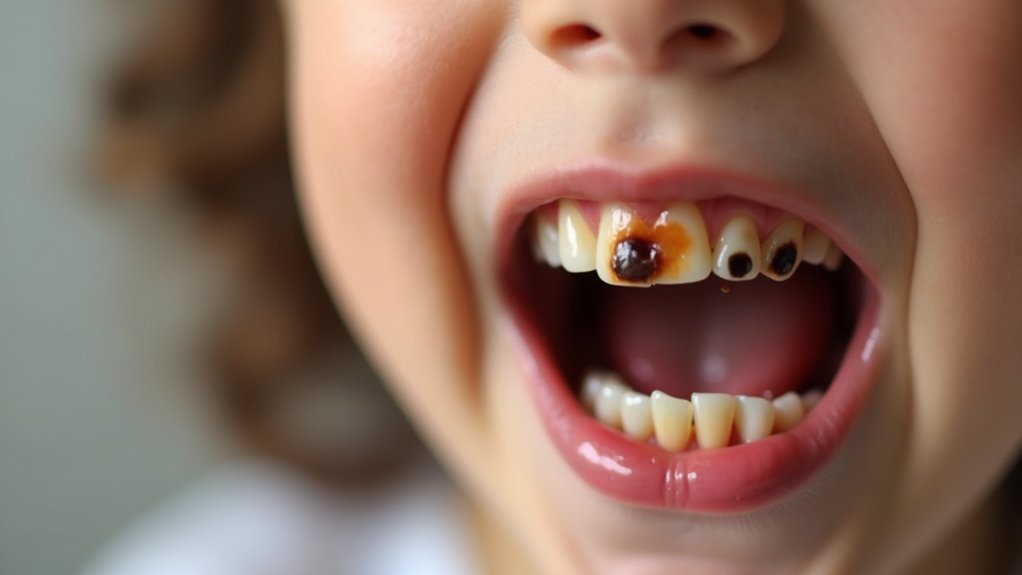
Tooth decay in baby teeth creates an acidic environment that harms the development of permanent teeth, resulting in malformations or discoloration. Bacteria from decayed teeth can spread, increasing the risk of dental problems and affecting overall oral health.
Additionally, early loss of baby teeth can cause adjacent teeth to shift, leading to misalignment when permanent teeth start to emerge.
Early detection through pediatric dentistry is essential to prevent emotional distress and guarantee your child has a healthy, beautiful smile for years to come.
Signs of Tooth Decay in Children
Tooth decay can sneak up on children, often without obvious symptoms at first. Recognizing the signs of tooth decay early is essential for your child’s overall oral health.
Here are three key indicators to watch for:
- White spots on teeth, especially near the gum line, can signal early decay.
- Brown or black discoloration suggests that decay has progressed and needs immediate attention.
- Your child may report pain or sensitivity, particularly when eating sweets or consuming hot or cold drinks.
If you notice any of these signs, schedule a dental check-up promptly for early detection and to prevent untreated cavities from worsening.
Long-term Effects of Untreated Cavities
Untreated cavities in children’s teeth can lead to serious long-term consequences that extend far beyond discomfort. The decay in baby teeth can damage adult teeth, causing malformations and delays in eruption. High bacterial levels can invade permanent teeth, leading to permanent staining. Early loss of baby teeth creates spacing issues, misaligning neighboring teeth as permanent ones emerge. These untreated cavities can spread, resulting in extensive dental treatments later. In addition, significant pain can impact a child’s ability to eat and speak, affecting overall development.
| Consequence | Impact on Teeth | Impact on Development |
|---|---|---|
| Damage to adult teeth | Malformations, discoloration | Delayed speech, eating issues |
| Spacing issues | Misalignment of teeth | Affects confidence, social skills |
| Increased decay spread | Multiple cavities | Higher dental treatment needs |
| Pain and discomfort | Oral hygiene challenges | Overall health impact |
Orthodontic Issues From Early Tooth Loss
Losing baby teeth too early can set off a chain reaction of orthodontic issues that complicate your child’s dental health.
Early tooth loss often leads to:
- Shifting teeth into empty spaces, causing misalignment when permanent teeth emerge.
- Complications in spacing, making future orthodontic treatment more challenging and costly.
- Need for corrective measures, like braces, to address uneven growth and positioning.
These issues can crowd permanent teeth and disrupt their normal eruption pattern.
Addressing these concerns proactively can help guarantee your child’s smile remains healthy and aligned, minimizing the need for extensive orthodontic treatment later on.
Preventing Cavities and Maintaining Healthy Baby Teeth
While it might seem easy to overlook baby teeth, maintaining their health is essential for your child’s overall dental well-being.
Establish a strong oral hygiene routine by brushing twice a day and flossing regularly to prevent cavities. Limiting sugary snacks and drinks, especially between meals, can greatly reduce cavity risks. Using fluoride toothpaste strengthens baby teeth enamel, making them more resistant to decay.
Additionally, routine dental check-ups every six months help identify issues early, ensuring prompt treatment. By modeling good oral health practices, you can encourage your child to adopt lifelong habits that support their permanent teeth’s health.
The Role of Regular Dental Visits in Oral Health
Establishing a routine for dental visits is an integral part of maintaining your child’s oral health.
Regular dental visits play an essential role in preventing issues that can affect both baby teeth and adult teeth.
Regular dental visits are crucial for safeguarding both baby and adult teeth from potential problems.
Here are three key benefits:
- Early detection of cavities and dental issues helps prevent tooth loss.
- Professional cleanings reduce plaque and tartar, supporting the importance of good oral hygiene.
- Timely interventions, like fluoride treatments, strengthen baby teeth against decay.