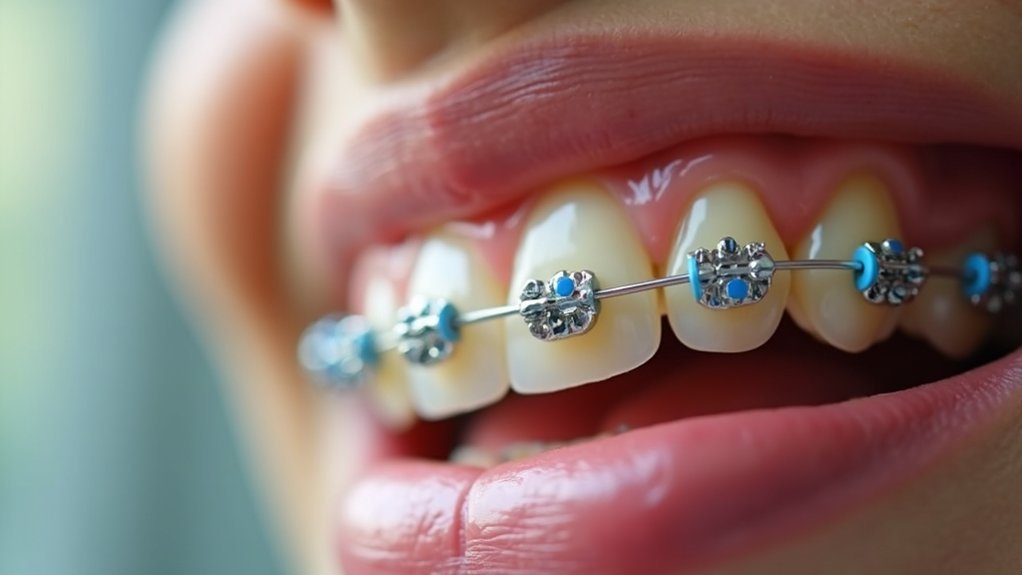

Yes, braces can pull down misaligned teeth by applying gentle, continuous pressure through archwires connected to brackets. This pressure gradually shifts the teeth into their desired positions within the jawbone. Orthodontists strategically plan adjustments to target specific teeth, ensuring effective movement while minimizing the risk of complications. Factors like the severity of impaction and age can influence the duration of treatment. Explore more about the mechanics and benefits of braces in aligning your teeth effectively.
Key Takeaways
- Yes, braces can pull down teeth by applying gentle, continuous pressure through archwires connected to brackets.
- Downward movement is facilitated by compressing surrounding ligaments and bone, allowing gradual repositioning of misaligned teeth.
- Specific techniques, such as gold chains or springs, may be utilized for effective vertical movement.
- Regular adjustments by the orthodontist are essential to target specific teeth and ensure optimal results.
- Patient compliance with orthodontic recommendations greatly influences the success and duration of the tooth movement process.
Understanding the Mechanics of Tooth Movement With Braces
When you wear braces, they apply gentle, continuous pressure to your teeth, which gradually shifts them into the desired positions. This orthodontic treatment utilizes brackets and archwires to facilitate tooth movement by compressing and expanding surrounding ligaments and the jawbone.
Moving teeth vertically, such as pulling them down, involves complex adjustments that your orthodontist manages to prevent complications like gum recession. While the average movement is about four millimeters, specialized techniques can achieve more under careful supervision.
Patient compliance and regular adjustments are essential for effective tooth movement, ensuring you achieve that beautiful smile you desire during the treatment duration.
The Role of Braces in Aligning Impacted Teeth
Aligning impacted teeth is a vital aspect of orthodontic treatment, as these teeth can hinder proper bite function and overall oral health.
Braces work by applying gentle, continuous pressure through archwires attached to brackets on adjacent teeth. This process often involves specific techniques, like gold chains or springs, to facilitate the vertical movement of impacted teeth into the right positions.
Braces apply gentle, continuous pressure to guide impacted teeth into their proper positions using specialized techniques.
Regular adjustments and patient compliance with orthodontic guidelines are essential for achieving ideal results.
Successfully aligning impacted teeth not only enhances bite function but also improves speech clarity, contributing greatly to your overall oral health.
How Braces Apply Pressure to Move Teeth Downward
Braces exert gentle, continuous pressure on your teeth through an archwire connected to brackets. This pressure facilitates the downward movement of misaligned teeth during orthodontic treatment.
As the braces move, surrounding ligaments and bone compress, allowing for gradual repositioning. Orthodontists carefully plan adjustments to target specific teeth, ensuring effective downward movement without risking damage.
Regular adjustments are essential for successful results, as the average tooth can move about four millimeters. By following your orthodontist’s guidelines, you can achieve a healthier smile while avoiding complications like gum recession, enhancing your overall dental health throughout the treatment process.
Factors Influencing the Duration of Tooth Movement
Tooth movement duration varies greatly based on several key factors. Understanding these can help you manage expectations for your treatment plan:
Tooth movement duration can vary significantly based on individual factors, so it’s essential to set realistic expectations for your treatment plan.
- Severity of the impaction: Mild cases generally take less time.
- Age of the patient: Younger individuals often experience faster movement due to ongoing jaw development.
- Different types of braces: Traditional metal braces might differ in effectiveness compared to clear aligners.
These factors influence how long it takes to move your teeth and address orthodontic issues, highlighting the importance of tailored approaches to meet individual needs for ideal results.
The Importance of Regular Adjustments in Orthodontic Treatment
Orthodontic treatment relies heavily on the timely management of tooth movement, and regular adjustments play a vital role in this process.
Scheduled every 4 to 8 weeks, these adjustments allow your orthodontist to carefully monitor progress, ensuring that braces or clear aligners apply the correct pressure to your teeth.
By evaluating treatment effectiveness, any necessary modifications can be made to address unforeseen challenges.
Maintaining good oral hygiene during this journey is essential, as skipping adjustments may hinder progress and extend the time it takes to achieve the desired end result of straightening crooked teeth and improving overall dental health.
Potential Complications of Moving Teeth With Braces
When you undergo treatment to move your teeth, it’s important to be aware of potential complications that might arise. These can impact your oral health and treatment effectiveness:
- Root resorption: Shortening of tooth roots, affecting stability.
- Periodontal problems: Issues like gum recession or inflammation due to excessive force.
- Misalignment of the bite: Can necessitate further orthodontic intervention.
Additionally, you might experience pain, tooth mobility, or sensitivity if the supporting structures struggle to adapt.
Understanding these risks helps you engage in proactive discussions with your orthodontist, ensuring a smoother journey towards achieving your desired smile.
Assessing Your Candidacy for Braces and Tooth Movement
How do you know if you’re a good candidate for braces and effective tooth movement? An orthodontist might recommend traditional metal braces based on your dental structure and health.
They’ll assess if there’s enough space in your upper and lower jaw for the desired movements. Mild bite issues generally respond better, requiring less time for treatment.
In some cases, tooth extractions or additional procedures may be necessary to facilitate movement. Patient compliance with guidelines is essential throughout this process, which takes time and commitment.
For a personalized assessment toward your new smile, contact us today to schedule your consultation.