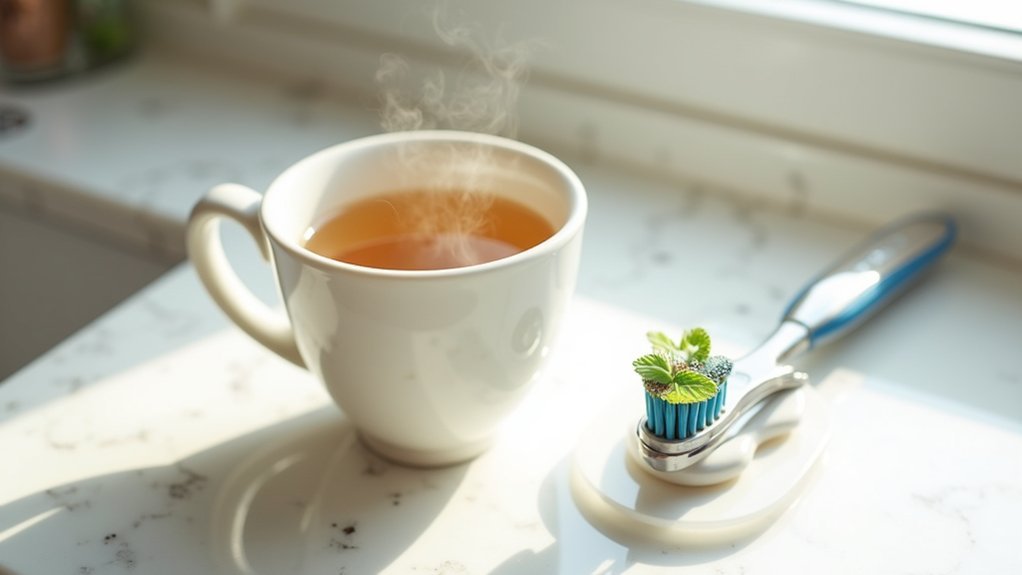

Drinking tea immediately after brushing your teeth isn’t advisable. The acidity in tea can weaken your enamel right after you’ve cleaned away plaque, reducing the effectiveness of fluoride. It’s best to wait at least 30 minutes after brushing to allow fluoride to remineralize your enamel. If you can’t wait, rinsing with plain water can help. For balanced dental hygiene, consider incorporating tea either before brushing or after a proper wait. You’ll discover more tips for a healthier routine ahead!
Key Takeaways
- Drinking tea immediately after brushing is not advisable due to enamel weakening from acids in tea.
- Wait at least 30 minutes post-brushing to allow fluoride to remineralize enamel.
- Rinsing with plain water after brushing can help clear toothpaste residue before drinking tea.
- Consider drinking tea before brushing or rinsing with water afterward to minimize staining.
- Good oral hygiene practices can mitigate the potential negative effects of tea on teeth.
Is It Okay to Drink Tea After Brushing Your Teeth?
Many people wonder if it’s okay to drink tea right after brushing their teeth.
It’s actually not advisable. Drinking tea immediately can compromise your enamel, as the acids in tea, especially black tea, can weaken it after plaque removal. This diminishes the effectiveness of the fluoride treatment you’ve just applied.
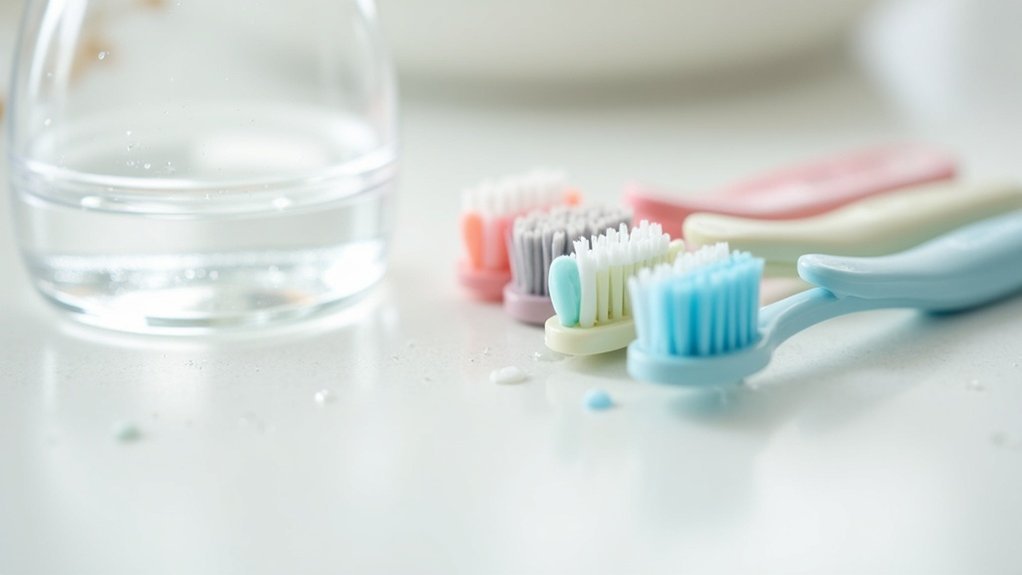
To protect your dental hygiene, it’s best to wait at least 30 minutes post-brushing. Rinsing with water can help clear toothpaste residue, but avoiding tea right away minimizes the risk of enamel erosion and staining.
For ideal oral health, consider drinking tea before brushing instead.
When to Drink Tea After Brushing Teeth?
While you might be enthusiastic to enjoy a cup of tea after brushing your teeth, it’s essential to know the right timing.
To protect your dental health, consider the following:
- Wait at least 30 minutes post-brushing to allow fluoride to remineralize enamel.
- Drinking tea immediately can hinder fluoride integration, increasing enamel erosion risk.
- Rinsing your mouth with plain water helps eliminate toothpaste residue.
- Lighter teas like green tea are gentler, but it’s still advisable to wait.
- For ideal oral hygiene, enjoy tea before brushing or adhere to the 30-minute rule after brushing.
Including Tea in Your Daily Dental Hygiene Practice
Incorporating tea into your daily dental hygiene routine can enhance both your enjoyment and oral health if done thoughtfully.
Ideally, drink tea before brushing or at least 30 minutes after to give fluoride time to work for enamel protection. After consuming tea, rinse your mouth with plain water to minimize staining and counteract acidity.
Additionally, using fluoride mouthwash can strengthen enamel and combat erosion. Remember, brushing before tea helps remove plaque and food particles, setting the stage for effective oral hygiene practices.
Balancing tea consumption with these steps is key to safeguarding your dental health while savoring your favorite beverage.
Effects of Tea on Teeth and Enamel
Tea can have significant effects on your teeth and enamel, particularly due to its acidity and tannin content.
To protect your smile, consider the following:
- Black tea is more acidic and can erode enamel faster than green or white teas.
- Tannins in tea may lead to staining, especially with darker varieties.
- Excessive tea consumption increases the risk of enamel damage.
- Rinsing your mouth with water after drinking tea can reduce staining.
- Maintaining good oral hygiene, including brushing, helps mitigate the effects of tea on your teeth.
Incorporating these practices can keep your mouth healthy while enjoying your favorite brew.
Final Say!
When it comes to enjoying your favorite tea, timing is essential for maintaining ideal dental health. Drinking tea immediately after brushing can increase the risk of enamel erosion due to acidity, hindering fluoride’s effectiveness.
For best oral hygiene, wait at least 30 minutes after brushing to allow fluoride to remineralize and strengthen your enamel. If tea is your preference, consider consuming it before brushing or rinsing with water afterward, then waiting before you brush again.