
Yes, you can absolutely get dental implants even if you have no teeth. Implants act as artificial roots that securely hold restorations like crowns or dentures, providing a stable foundation while preventing bone loss in your jaw. Even if you’ve experienced significant bone loss, there are grafting options to enhance bone volume for successful implant placement. Discovering more about the types of implants and the benefits they offer can help you on your journey to a confident, healthy smile.
Key Takeaways
- Yes, you can get dental implants even if you have no teeth, as long as you have sufficient jawbone health.
- Adequate bone volume is crucial; grafting may be needed if bone density is insufficient.
- Dental implants serve as artificial roots and can support crowns, bridges, or dentures.
- A thorough consultation with dental professionals assesses your oral health and determines the best treatment plan.
- Successful implants enhance functionality, aesthetic appearance, and help prevent further bone loss in the jaw.
What Are Dental Implants?
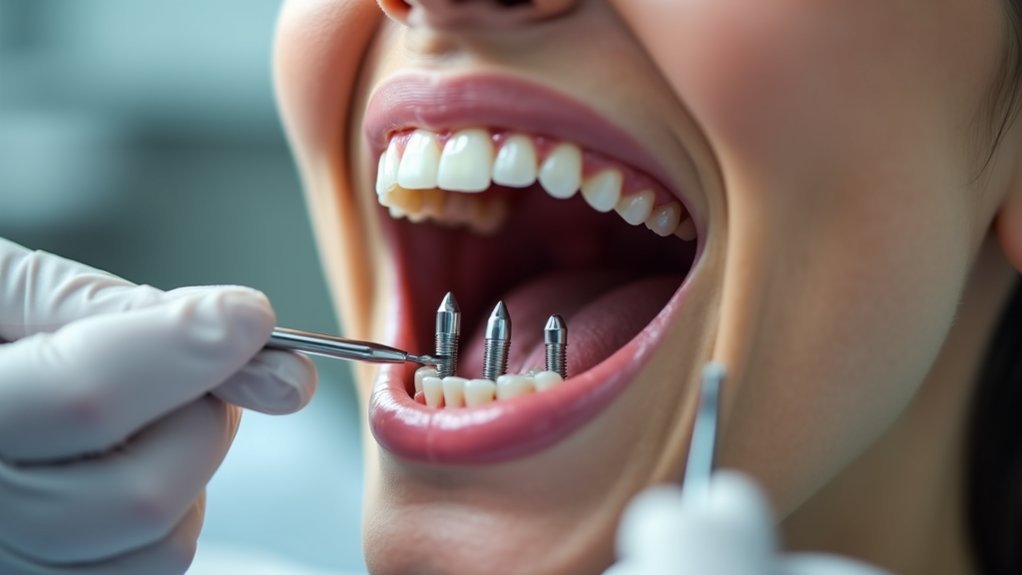
Dental implants are a revolutionary solution for those dealing with missing teeth. These titanium screws mimic tooth roots, providing a permanent restoration option that enhances your oral health.
They anchor into the jawbone, requiring sufficient bone volume for successful placement. Implants can support single crowns, fixed bridges, or even replace an entire set of teeth with implant-supported dentures.
The process of osseointegration guarantees stability, allowing them to function just like natural teeth. Beyond aesthetic benefits, implants stimulate the jawbone, preventing bone loss and maintaining your facial structure, ultimately serving you and those you care for.
Can You Get Implants Without Teeth?
Yes, you can get dental implants even if you have no teeth.
It’s important to have enough jawbone volume to support the implants, and in some cases, procedures like bone grafting may be necessary.
Depending on your situation, you have options like single-tooth implants, fixed bridges, or implant-supported dentures to restore your smile and functionality.
Eligibility for Implants
Have you ever wondered if you can still get dental implants even if you don’t have any teeth? The good news is, you can!
Your eligibility for implants depends on several factors:
- Bone Health: Sufficient jawbone is essential; significant bone loss may need grafting.
- Oral Condition: A thorough examination by a dental professional is necessary.
- Implant Options: Various solutions are available, including single-tooth implants and dentures.
- Timeliness: Addressing tooth loss promptly can prevent further complications.
Consult with your dentist to explore your options and determine your eligibility for implants. You deserve a confident smile!
Importance of Bone Volume
Bone volume plays an essential role in the success of dental implants, even for those without any remaining teeth.
After losing a tooth, your jawbone can begin to recede, which might require grafting to restore adequate bone density. Sufficient bone is vital for osseointegration, allowing your implants to fuse securely and provide stable support.
If significant bone loss has occurred, there are still options available, such as single-tooth implants, fixed bridges, or implant-supported dentures.
A thorough assessment by a dental professional, including imaging studies, will help determine the best approach tailored to your needs.
Your journey to a healthy smile is possible!
Types of Implant Options
If you’re considering dental implants despite having no remaining teeth, you might be relieved to know there are several viable options available.
Here are some types to explore:
- Single-tooth implants: Perfect for replacing individual missing teeth.
- Fixed bridges: Supported by implants to fill gaps in your smile.
- Implant-supported dentures: Offer stability and comfort for multiple missing teeth.
- All-on-4: This technique supports a full arch with just four implants, minimizing invasiveness.
Keep in mind, bone grafting may be necessary to enhance bone volume before placement.
Consult your dental professional to find the best option for your needs.
Types Of Dental Implants Used To Replace Teeth
Dental implants serve as a reliable solution for replacing missing teeth, even in cases where no natural teeth remain. You can choose from various options, including fixed bridges or implant-supported dentures. The All-on-4 technique allows for a full set of prosthetic teeth with fewer implants, ensuring immediate functionality. Here’s a quick overview:
| Type of Implant | Description |
|---|---|
| Fixed Bridge | 4 to 8 implants support an entire arch. |
| Implant-Supported Dentures | Secure dentures to the jawbone for stability. |
| All-on-4 | Fewer implants for a complete set of teeth. |
| Osseointegration | Essential for durability and longevity. |
These implants offer a stable and permanent solution to restore your smile.
If Bone Loss Is Significant There Are Still Options
If you’re dealing with significant bone loss, don’t lose hope; there are effective solutions available.
Bone grafting techniques can enhance your bone density, making you a candidate for dental implants.
Your dental team will guide you through the implant procedure timeline and discuss long-term success factors tailored to your unique situation.
Bone Grafting Techniques
When faced with significant bone loss, you might feel concerned about your eligibility for dental implants, but various bone grafting techniques can effectively address this challenge.
Here are four options to evaluate:
- Autografts: Bone grafts taken from your own body, ensuring compatibility.
- Allografts: Grafts sourced from tissue banks, offering a reliable alternative.
- Xenografts: Materials derived from animals, suitable for many patients.
- Synthetic grafts: Biocompatible materials designed to promote bone growth.
These grafting procedures can be performed after tooth extraction, enhancing jawbone density and stability for successful dental implants.
Implant Procedure Timeline
Understanding the implant procedure timeline is vital, especially for those facing significant bone loss. If you require bone grafting, you’ll need to take into account additional healing time before dental implants can be placed. Here’s a simplified overview of the process:
| Step | Duration |
|---|---|
| Initial Evaluation | 1 Appointment |
| Bone Grafting & Healing | 3-6 Months |
| Implant Placement | 1 Appointment |
| Osseointegration | 3-6 Months |
| Final Restoration | 2-4 Weeks |
Each step plays an essential role in ensuring the success of your implants, offering a supportive pathway to restored function and aesthetics.
Long-Term Success Factors
Although significant bone loss can complicate the dental implant process, there are still viable options to achieve long-term success.
Here are key factors to take into account:
- Bone Grafts: These can restore jawbone volume and density.
- Sources: Grafts can come from your own body, tissue banks, or synthetic materials.
- Timing: Grafting often occurs after tooth extractions, preparing your jaw for implants.
- Evaluation: A thorough assessment by a dental team is essential to tailor the best approach for your missing teeth.
Don’t Wait Until Your Teeth Are Gone
If you wait until your teeth are gone to evaluate dental implants, you may be missing out on an essential opportunity to maintain your oral health and overall well-being.
Addressing missing teeth sooner can prevent complications like jawbone deterioration and changes in facial appearance. Dental implants can provide a stable foundation for fixed bridges or implant-supported dentures, helping to restore your smile.
Prioritizing oral hygiene and consulting with a dentist guarantees you maximize the success of your implants. Taking action now can lead to better outcomes, allowing you to enjoy a functional and aesthetic smile for years to come.
Ready for a Confident, Healthy Smile?
Taking proactive steps toward your dental health can lead you to a confident, healthy smile.
If you’re considering dental implants for your missing teeth, here’s what to know:
- Assess your jawbone: A dental professional will determine if you have enough bone to support implants.
- Explore options: Techniques like All-on-4 can provide a full arch with fewer implants.
- Consider bone grafting: This may be necessary if significant bone loss has occurred.
- Create a plan: Consulting with a dental professional guarantees a personalized approach to restoring your smile.
Your journey to confidence starts today!