
Yes, you can get veneers on mildly crooked teeth to improve your smile’s appearance. They can create the illusion of straighter teeth without extensive orthodontic treatment. However, severe misalignments might require braces or other solutions first. A cosmetic dentist will evaluate your oral health to determine the best approach for your specific situation. If you’re curious about the veneers procedure or alternative treatments, there’s much more to uncover regarding your options for a perfect smile.
Key Takeaways
- Veneers can address mildly crooked teeth, creating an illusion of a straighter smile.
- Severe overcrowding typically requires orthodontic treatment before considering veneers.
- A consultation with a cosmetic dentist is essential for assessing suitability for veneers.
- Proper tooth evaluation ensures underlying issues are addressed for optimal veneer placement.
- Veneers provide a quicker aesthetic solution compared to traditional orthodontics for mild misalignments.
Understanding Veneers and Their Applications
Understanding veneers and their applications is essential if you’re considering improving your smile.
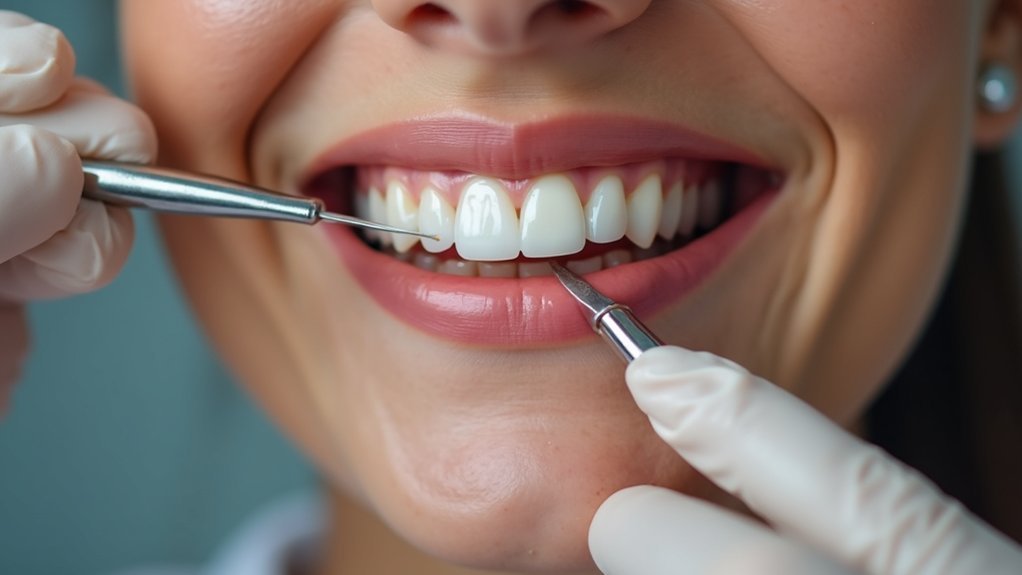
Veneers are thin, custom-made porcelain shells designed to enhance the appearance of your teeth. They effectively address mildly crooked teeth, offering a cosmetic solution that creates the illusion of a straighter smile.
The veneer procedure involves careful tooth preparation and customization to match your natural teeth. While they can mask minor crowding and uneven spacing, severe misalignments may require different treatment options, like orthodontics.
With proper dental care, porcelain veneers can last up to 15 years, providing a durable way to achieve a beautiful smile.
Assessing the Severity of Crooked Teeth
How can you determine if your crooked teeth are suitable for veneers?
Start by consulting a dentist to assess your oral health and the severity of your crookedness. Mild misalignments may qualify for veneers, while severe overcrowding often necessitates orthodontic treatment first.
Your dentist will evaluate the dental structure, checking for issues like uneven spacing that could impact veneer application. Patients with slight crookedness can achieve significant aesthetic improvements with veneers, but a thorough assessment is essential.
Prioritizing your dental concerns guarantees you receive the best recommendation for enhancing your smile while maintaining ideal oral health.
The Role of a Cosmetic Dentist
When considering veneers for crooked teeth, a cosmetic dentist plays an essential role in evaluating your dental health and misalignment severity.
They’ll work with you to create a tailored treatment plan that aligns with your aesthetic goals.
This professional guidance guarantees that you achieve the best results while maintaining your overall oral health.
Importance of Professional Assessment
Although you may be tempted to seek veneers as a quick fix for crooked teeth, a professional assessment by a cosmetic dentist is crucial to determine if they’re the right solution for you.
This evaluation examines your overall oral health and identifies any underlying dental issues that might affect veneer placement. Your dentist will consider the severity of misalignment and the condition of your teeth, potentially recommending orthodontic treatments like braces or Invisalign for the best results.
A thorough consultation guarantees you understand the benefits and limitations of veneers, helping you achieve your desired aesthetic outcome effectively.
Treatment Plan Customization
Once you’ve undergone a professional assessment, your cosmetic dentist will begin the process of treatment plan customization tailored to your specific needs. This personalized treatment includes measuring available space and selecting materials to achieve your desired tooth appearance. Your dentist will outline the number of veneers needed and the timeline for the procedure, typically spanning two appointments. Continuous communication guarantees adjustments can be made for ideal results and comfort.
| Step | Description |
|---|---|
| Initial Consultation | Discuss aesthetic goals and assess oral health |
| Custom Shell Selection | Choose materials for veneers |
| Treatment Timeline | Outline appointments and procedures |
| Ongoing Communication | Guarantee comfort and make necessary adjustments |
Advantages of Using Veneers for Crooked Teeth
While traditional orthodontic treatments can take years to yield results, veneers offer a quicker and more aesthetically pleasing solution for those with mildly crooked teeth.
Veneers for crooked teeth can improve the appearance of your smile, creating the illusion of straightness and enhancing overall symmetry. This fast and effective approach typically requires only two visits, unlike braces, which can take up to two years.
Custom-crafted to match your natural teeth, porcelain veneers are durable and stain-resistant, lasting up to 15 years with proper care.
The Veneer Procedure Explained
Understanding the veneer procedure is essential for anyone considering this cosmetic treatment to enhance their smile.
First, you’ll have an initial consultation to assess your oral health and aesthetic goals. During the procedure, a small amount of enamel is removed to guarantee the proper fit of the veneers, typically crafted from high-quality porcelain.
Impressions of your teeth are taken and sent to a dental lab for custom fabrication. While waiting, temporary veneers may be placed for protection.
Once ready, the permanent veneers are bonded to your teeth using a strong dental adhesive, guaranteeing a natural appearance and comfortable fit.
Alternatives to Veneers for Crooked Teeth
If you’re considering options for correcting crooked teeth, it’s important to know that veneers aren’t the only solution available. Orthodontic treatments, like braces or clear aligners, effectively straighten your teeth over time. For slightly crooked teeth, dental bonding offers a less invasive method to enhance aesthetics. If you have overcrowded teeth or severe misalignment, crowns or full mouth reconstructions may be more suitable. Here’s a quick comparison of alternatives:
| Treatment Type | Benefits |
|---|---|
| Orthodontic | Addresses root causes |
| Clear Aligners | Discreet and removable |
| Dental Bonding | Corrects minor imperfections |
Maintaining Oral Health Before Getting Veneers
Before getting veneers, it’s vital to prioritize your oral health to guarantee the best outcome. Start by maintaining oral hygiene—brush twice daily and floss regularly.
Schedule dental check-ups to catch any underlying issues like gum disease or tooth decay, which must be resolved before veneer placement. Sore or bleeding gums can complicate the process, so addressing these concerns is essential.
Proper oral care also prevents bacteria buildup in overcrowded teeth, securing a smoother veneer application and enhanced longevity.
Finally, any pain while eating or brushing signals a need for thorough evaluation before veneers to ascertain your mouth is healthy.
Success Stories and Patient Experiences
After ensuring your oral health is in top shape, many patients find that veneers offer remarkable results for crooked teeth.
The veneer procedure can lead to incredible smile transformations with minimal discomfort.
Here are some success stories from satisfied patients:
- Improved aesthetics achieved in just two appointments
- Natural appearance of porcelain veneers effectively masks crookedness
- High satisfaction rates reflected in numerous five-star reviews
- Quick results, often faster than traditional orthodontics
- Enhanced confidence from a beautifully aligned smile
These patient experiences highlight how veneers can truly change lives, providing both comfort and exceptional results for those seeking an improved smile.