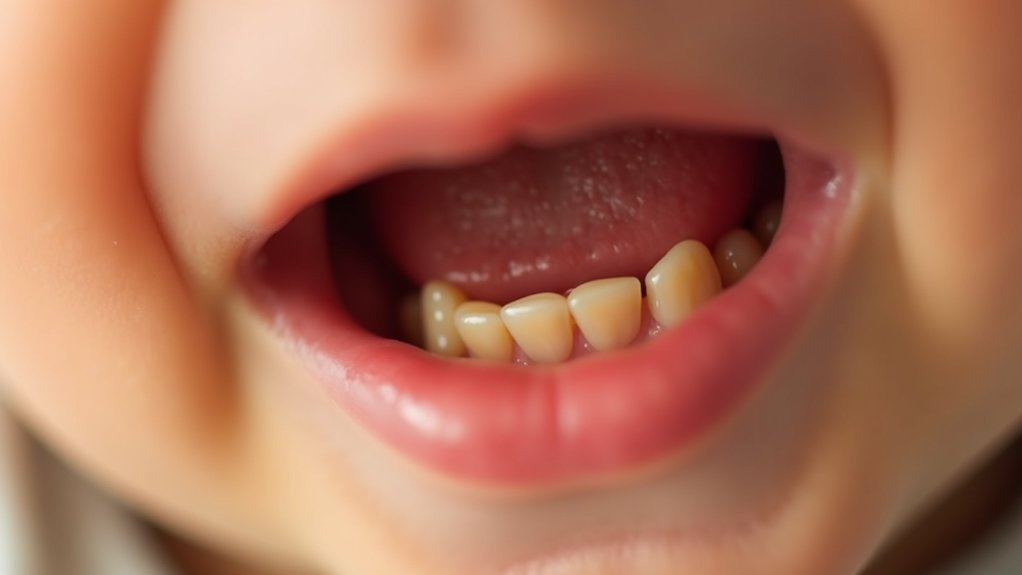

Yes, you can be born with different shades of teeth. Genetic factors heavily influence tooth color, including the thickness and quality of enamel. Conditions like amelogenesis imperfecta can result in yellow or brown teeth, while other genetic traits may lead to desirable variations. Additionally, environmental factors, such as medication or illness, can affect dental coloration. Understanding these influences helps clarify your infant’s tooth color variations, revealing more intriguing insights about dental health.
Key Takeaways
- Infants can be born with different shades of teeth due to genetic factors affecting enamel quality and thickness.
- Conditions like amelogenesis imperfecta may cause intrinsic yellow-brown discoloration in newborns.
- External factors, such as maternal medications during pregnancy, can lead to varying tooth colors at birth.
- Illnesses during infancy, like jaundice, can also result in noticeable color changes in teeth.
- Regular dental care is important to monitor and address any discoloration in infant teeth.
Understanding Tooth Discoloration in Infants
Tooth discoloration in infants can arise from a variety of factors, both genetic and environmental.
Baby teeth may appear yellow-brown due to conditions like amelogenesis imperfecta or gray from dentinogenesis imperfecta. Additionally, external influences such as iron-containing medications or tetracycline during pregnancy can lead to noticeable discoloration.
Conditions like jaundice may also tint teeth green shortly after birth. Trauma to the teeth or gums can result in colors ranging from pink to gray, depending on the injury’s severity.
Poor oral hygiene further complicates dental health, highlighting the importance of early monitoring and care for your infant’s oral health.
Genetic Factors Influencing Tooth Color
While many factors contribute to the color of your child’s teeth, genetics plays a significant role from the very start. The thickness and quality of tooth enamel, influenced by inherited traits, can lead to variations in color.
Some families may pass down genes for thicker, whiter enamel, while others might’ve a predisposition for yellow teeth. Conditions like amelogenesis imperfecta can result in yellow-brown teeth due to soft enamel prone to decay and intrinsic staining.
This inherent discoloration complicates whitening efforts, making over-the-counter treatments less effective for those with genetically yellow teeth. Understanding these genetic influences is essential for proper dental care.
Impact of Illness on Tooth Color
When infants experience illness, it can directly affect the color of their developing teeth. Conditions like jaundice, often caused by hyperbilirubinemia, can lead to discolored teeth, appearing yellow or even green. This discoloration results from the liver’s inability to process bilirubin effectively.
Additionally, infections during infancy can signal underlying health issues, further impacting tooth color. Medical conditions, such as infant hepatitis and heart disease, are also linked to tooth discoloration, emphasizing the need to monitor overall health.
Early identification and treatment of these illnesses are vital, as they greatly influence both the color and health of developing teeth.
The Role of Medications in Discoloration
Medications can greatly influence the color of an infant’s teeth, particularly those containing iron or tetracycline antibiotics. Awareness of this can help you maintain a healthy smile for your child.
Here are key points to take into account:
- Iron-containing medications may stain baby teeth.
- Tetracycline taken during pregnancy can cause permanent discoloration.
- High-iron vitamin supplements can darken tooth color.
- Discolored teeth from medications may not be reversible.
- Consult your pediatrician or dentist if you suspect medication-related discoloration.
Understanding these factors is essential for promoting oral hygiene and ensuring the best outcomes for your child’s dental health.
Importance of Dental Care for Infants
Establishing a dental care routine for infants is essential for their long-term oral health. You should schedule the first dental visit after your child’s first tooth erupts or by age 1. This helps monitor oral health and address any discoloration.
Brush your baby’s primary teeth twice daily with a smear of fluoride toothpaste until they can spit, then switch to a pea-sized amount. Avoid sugary liquids in bottles and never put your child to bed with one.
Regular dental checkups will identify discoloration causes and guide you in maintaining healthy teeth as your child grows.
When to Seek Professional Help for Tooth Discoloration
How can you tell if your baby’s tooth discoloration is a sign of a more serious issue? Monitoring your baby’s oral health is essential. If you notice any discoloration, consult a dentist promptly.
Monitoring your baby’s oral health is crucial; consult a dentist if you notice any tooth discoloration.
Here are key reasons to seek professional help:
- Discoloration appears shortly after birth.
- Teeth show yellow or brown hues from medications.
- Trauma or injury results in discoloration.
- Early dental visits identify underlying health issues.
- Regular check-ups prevent severe dental problems.
Addressing these concerns early guarantees your baby’s teeth stay healthy and strong, setting a foundation for lifelong oral health.