
At age 13, you typically won’t have fully erupted wisdom teeth, but they’re developing beneath your gums. Most people have their 28 permanent teeth in place by this age. Pain, swelling, or tenderness near the back of your jaw may indicate that your wisdom teeth are on the way. It’s essential to have early dental evaluations to monitor their growth and identify potential issues. Discovering more about this can help you navigate any concerns effectively.
Key Takeaways
- At age 13, wisdom teeth typically have not yet erupted, but development may be underway.
- Wisdom teeth generally begin to emerge between ages 17 and 25, most commonly between 17 and 19.
- Regular dental check-ups around age 12 or 13 are essential for monitoring wisdom teeth development.
- Signs such as jaw pain or swollen gums may indicate the early stages of wisdom teeth emergence.
- Early evaluation by a dentist can help identify potential issues, such as impaction or crowding, related to wisdom teeth.
Understanding Wisdom Teeth Development
As you approach your teenage years, understanding the development of wisdom teeth becomes vital.
Wisdom teeth, or third molars, typically begin to develop around age 12, with calcification occurring during this time. By age 13, you should have 28 permanent teeth, with wisdom teeth being the last to emerge.
Wisdom teeth start developing around age 12, and by age 13, you should have 28 permanent teeth.
While most people see them erupt between ages 17 and 25, some may experience early emergence as young as 13 or 14.
Regular dental checkups are essential for monitoring their development, as early evaluation can help identify complications before they arise.
Consulting pediatric dentists guarantees proper guidance throughout this process.
Typical Age Range for Wisdom Teeth Eruption
Wisdom teeth typically start to erupt between the ages of 17 and 25, with the most common age range falling between 17 and 19.
By age 13, you usually have 28 permanent teeth, excluding wisdom teeth, as they haven’t erupted yet.
The development of these third molars can vary; some individuals may not develop them at all.
Regular dental check-ups are vital during adolescence to monitor the potential eruption of wisdom teeth and address any issues, such as impacted teeth.
Maintaining your oral health is essential, so staying informed about this stage of dental development is important.
Signs That Wisdom Teeth Are Coming In
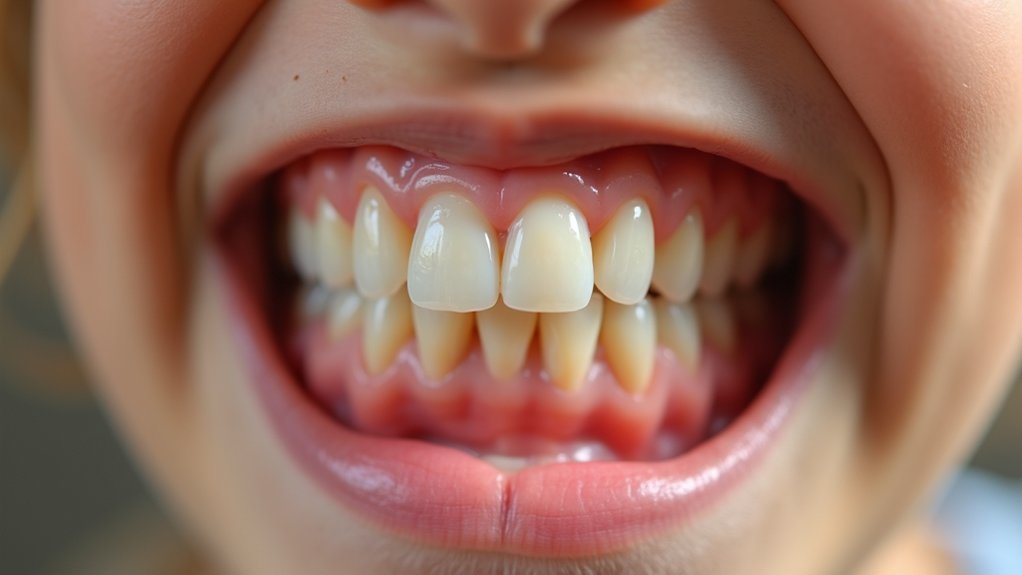
The emergence of wisdom teeth can often present noticeable signs, even as early as age 13. You might experience pain in your jaw or cheeks, along with swollen gums at the back of your mouth.
Tenderness or bleeding in the gums may also occur, indicating that wisdom teeth are beginning to develop. Headaches and shifting of nearby teeth can signal this process as well.
Additionally, persistent jaw pain and cheek swelling are common symptoms. Regular dental check-ups are essential for monitoring these signs and ensuring the appropriate evaluation of your wisdom teeth’s development.
Stay vigilant for these indicators.
Importance of Early Dental Evaluation
Recognizing the importance of early dental evaluation for wisdom teeth can make a significant difference in your oral health.
Starting evaluations around age 12 or 13 allows for effective monitoring of wisdom teeth development. A pediatric dentist can identify potential issues like impacted wisdom teeth, helping prevent complications down the line.
Regular dental checkups are essential for spotting early signs of crowding or misalignment. Addressing these concerns promptly can lead to easier extractions if necessary, as roots are less developed in younger patients, ultimately speeding up the recovery period and minimizing risks associated with complications.
Your proactive approach matters!
When to Consider Wisdom Teeth Removal
If you’re noticing discomfort or crowding in your mouth, it might be time to contemplate wisdom teeth removal.
An early evaluation at age 13 is essential, as signs of an impacted wisdom tooth can surface during this time. Dentists typically recommend extraction between ages 13 and 18, as younger patients heal faster and experience fewer complications.
If x-rays reveal potential issues or symptoms like pain arise, consulting an oral surgeon is wise. Waiting until adulthood can complicate the procedure due to fully developed roots, jeopardizing your dental health.
Consulting an oral surgeon early is crucial if x-rays show issues or pain, as waiting can complicate dental health.
Prioritize your well-being by addressing wisdom teeth concerns promptly.