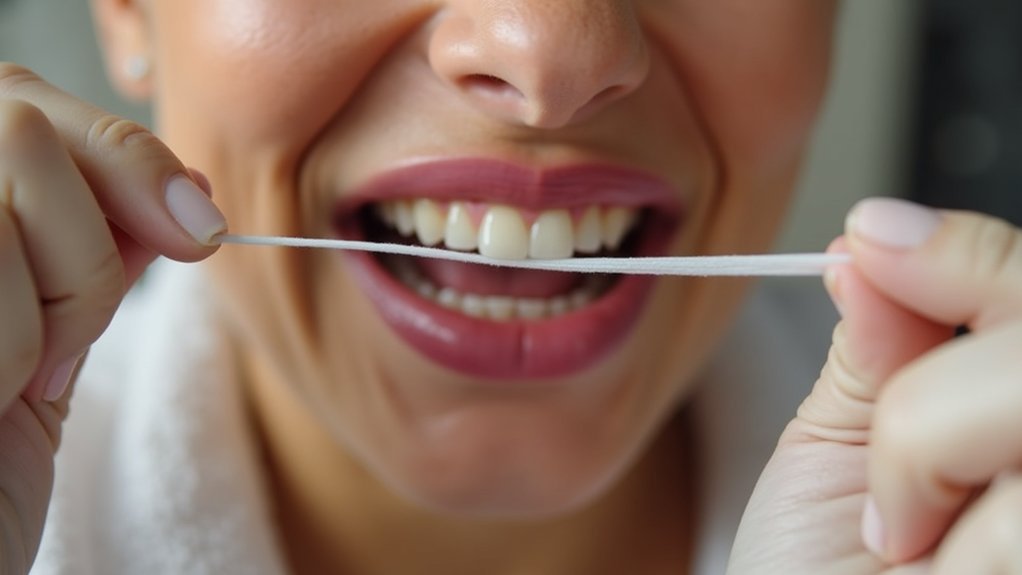

If you can’t floss between your teeth after a filling, it’s likely due to tighter spaces or excess filling material. This can make flossing difficult and may require adjustments from your dentist. It’s important to floss gently to avoid damaging your fillings or gums. Using waxed floss or alternatives like interdental brushes can help. Regular dental check-ups are vital for monitoring your fillings and ensuring your oral health remains in check. Find out more about managing post-filling flossing challenges.
Key Takeaways
- Increased tightness between teeth after a filling may complicate flossing; adjustments may be needed for easier access.
- If floss is stuck or shredding, it could indicate an improperly adjusted filling that requires dental attention.
- Using waxed floss or dental tape can ease flossing in tight spaces and reduce the risk of damaging fillings.
- Consider alternatives like interdental brushes or water flossers if traditional flossing proves difficult after a filling.
- Regular dental check-ups are crucial for monitoring filling integrity and addressing any flossing challenges promptly.
Understanding the Impact of Fillings on Flossing
When you receive a dental filling, you might notice that the tightness between your teeth increases, making it challenging to floss effectively.
After a dental filling, you may find increased tightness between your teeth, complicating your flossing routine.
This heightened pressure can result from excess filling material, necessitating adjustments for better flossing. If you struggle to insert dental floss, it may indicate that your filling needs refinement to prevent plaque buildup and decay.
Forcing floss can damage your filling and gums, so employing a gentle flossing technique is vital.
Regular dental check-ups are essential to address any flossing challenges and to maintain ideal oral hygiene, ensuring your dental care remains effective and supportive.
Why Flossing Is Essential After a Filling
Flossing after receiving a filling is essential for maintaining your oral health. It helps remove plaque and food particles that can accumulate between teeth, preventing future decay and gum disease.
Proper flossing also guarantees the integrity of the dental filling, protecting the surrounding tooth structure from irritation and damage. Regular flossing contributes to overall oral care, reducing the risk of cavities and promoting healthy gums, especially after dental procedures.
Use gentle techniques to avoid putting pressure on the filling, minimizing the risk of dislodgment. If you struggle to floss, consult your dentist for adjustments to guarantee effective oral care.
Common Challenges With Flossing Post-Filling
Flossing after a filling can be challenging due to tight spaces between your teeth, making it hard to maneuver the floss effectively.
If you find that the floss gets stuck or shreds, it may indicate that your filling needs adjustment.
Addressing these issues promptly with your dentist is essential to maintain your oral health and guarantee effective cleaning.
Tight Tooth Spaces
Tight tooth spaces can pose significant challenges after dental fillings, making it frustrating to maintain proper oral hygiene. When you try to floss between your teeth, the reduced gaps can hinder effective cleaning.
Dental work may contribute to this issue, so consider using waxed floss or glide floss to help ease the process. These options reduce friction and prevent shredding.
Alternatively, interdental brushes or floss picks can clean tightly spaced teeth without the same difficulties.
Filling Adjustment Needs
Experiencing difficulty with flossing after receiving a dental filling is a common concern that can signal the need for adjustments.
If your filling feels excessive, it may create tight spaces that hinder effective cleaning, leading to plaque and food particles buildup.
Delaying a filling adjustment can increase the risk of tooth decay, so it’s vital to consult your dentist promptly.
Forcing floss can damage your teeth and gums, making it essential to seek professional advice.
Regular dental visits allow for refinements in fillings and can provide tailored tips, such as using waxed floss, to improve your flossing experience.
Proper Flossing Techniques for Filled Teeth
Maintaining proper oral hygiene is essential, especially after getting dental fillings.
When flossing filled teeth, use waxed floss or dental tape, as they slide easily between tight spaces without damaging your fillings. Employ a gentle up-and-down motion, avoiding a sawing action that could dislodge the filling.
Floss carefully and consistently at least once a day to remove plaque and prevent dental issues around your filled teeth. If you encounter resistance, stop and consult your dentist, as this may indicate your filling needs adjustment.
Floss daily to eliminate plaque and ensure your fillings stay intact; consult your dentist if you feel resistance.
Prioritizing care after a tooth filling helps maintain your oral health and prevents future complications.
Alternatives to Traditional Flossing
If traditional flossing poses challenges, several effective alternatives can help you maintain oral hygiene. Consider using interdental brushes, which come in various sizes and effectively clean tight spaces. Dental tape is broader and flatter, making it easier to navigate between teeth with minimal discomfort. Water flossers utilize a stream of pulsating water, ideal for those who find traditional techniques difficult. Floss picks also provide better control and ease of use.
| Option | Benefits | Best For |
|---|---|---|
| Interdental Brushes | Effective cleaning, various sizes | Tight contacts |
| Dental Tape | Easy insertion, less discomfort | Wider gaps |
| Water Flossers | Removes plaque with water | Flossing challenges |
Always consult your dentist for personalized advice.
When to Consult Your Dentist
Consulting your dentist is essential when you encounter difficulties flossing between teeth after a filling, as unresolved issues can lead to more significant problems.
If you’re struggling, consider these points:
- Excess filling material can trap plaque, risking decay.
- Forcing floss may damage your teeth and gums.
- Prompt evaluation can prevent further complications, like cavity redevelopment.
- Dentists can recommend adjustments or alternative cleaning methods for better oral health.
Don’t wait—addressing these concerns early will help maintain your dental hygiene and overall well-being.
Your dentist is there to guarantee you have the best care possible after your filling.
Maintaining Oral Hygiene With Tight Teeth
Maintaining oral hygiene with tight teeth requires the right tools and techniques.
You should consider using waxed or glide floss, and explore alternatives like interdental brushes or water flossers for better access.
Regular dental check-ups will help you identify any issues and guarantee your cleaning methods are effective.
Choosing Effective Flossing Tools
When it comes to keeping your teeth clean, selecting the right flossing tools is essential, especially if your teeth are tightly spaced.
Consider these effective options to maintain your oral hygiene:
- Waxed floss or glide floss for easy sliding without shredding
- Interdental brushes available in various sizes for different gaps
- Floss picks that provide leverage and control for tight spaces
- Water flossers using a stream of water to remove plaque and debris
Each tool serves a unique purpose, so choose the one that best fits your needs and helps you maintain a healthy smile.
Gentle Flossing Techniques
Although tight teeth can make flossing challenging, employing gentle techniques is vital for preserving your fillings and maintaining oral hygiene.
Use waxed or PTFE dental floss to glide smoothly between your teeth without shredding. Floss gently using an up-and-down motion to avoid displacing fillings or irritating gums.
If maneuverability is an issue, consider floss picks or interdental brushes. It’s essential to maintain a consistent flossing routine at least once a day to effectively remove plaque.
I highly recommend consulting your dentist for personalized advice on the best gentle flossing techniques and tools for your specific dental needs.
Regular Dental Check-Ups
Regular dental check-ups play an essential role in addressing the challenges of tight teeth and ensuring effective oral hygiene. By visiting your dentist regularly, you can enhance your overall oral health and prevent issues like tooth loss.
Here’s what to expect during your visits:
- Personalized advice on flossing techniques and tools for tight spaces
- Professional cleanings to remove plaque buildup
- Monitoring of tooth alignment and spacing
- Early intervention to avoid complications from improper cleaning
These steps are vital, especially after dental fillings, to maintain healthy gums and teeth, ensuring you can floss effectively.
Tips for Preventing Filling Complications
To prevent complications with your dental fillings, it is vital to maintain proper oral hygiene and stay vigilant about any changes in your mouth. Regular appointments with your dentist are important to monitor your fillings. Use gentle flossing techniques, and consider waxed floss for tight spaces. If you notice resistance while flossing, stop immediately and consult your dentist. Here’s a quick reference table to help you:
| Tip | Description |
|---|---|
| Schedule Appointments | Regular visits to check filling integrity |
| Use Proper Technique | Floss gently with a back-and-forth motion |
| Choose Waxed Floss | Easier navigation in tight spaces |
| Monitor for Issues | Be alert for movement or resistance |
| Maintain Oral Hygiene | Prevent plaque buildup around fillings |