
Yes, beets can stain your teeth. Their vibrant betalains cling to tooth enamel, especially if it’s weakened. The deep purple-red color and acidic nature of beets increase this staining potential. To minimize stains, rinse your mouth with water right after eating beets, and brush your teeth within 30 minutes. Maintained dental hygiene can help manage staining, and using at-home whitening products can further address any discoloration. Learn more about effective stain removal techniques and beet benefits.
Key Takeaways
- Yes, beets can stain teeth due to their vibrant betalains that cling to tooth enamel.
- Weak enamel increases the risk of staining from beets, especially when exposed to their acidic nature.
- Rinsing with water immediately after consuming beets can help wash away pigment and minimize staining.
- Regular brushing with fluoride toothpaste and using whitening products can effectively remove beet stains.
- Using a straw when drinking beet juice reduces direct contact with teeth, decreasing the likelihood of stains.
About & Education
When you enjoy beets, it’s vital to understand their potential impact on your dental health.
Beet juice contains vibrant pigments called betalains, which can easily stain your teeth, particularly if your enamel is already weakened. Maintaining proper dental hygiene is essential in preventing and managing these stains.
Rinsing your mouth with water immediately after consuming beets can help wash away pigments and reduce discoloration risks. Regular brushing and flossing are key to keeping your teeth healthy.
Additionally, at-home teeth whitening products, like those from SNOW, can effectively address beet stains, allowing you to savor this nutritious vegetable worry-free.
Why Do Beets Stain Teeth?
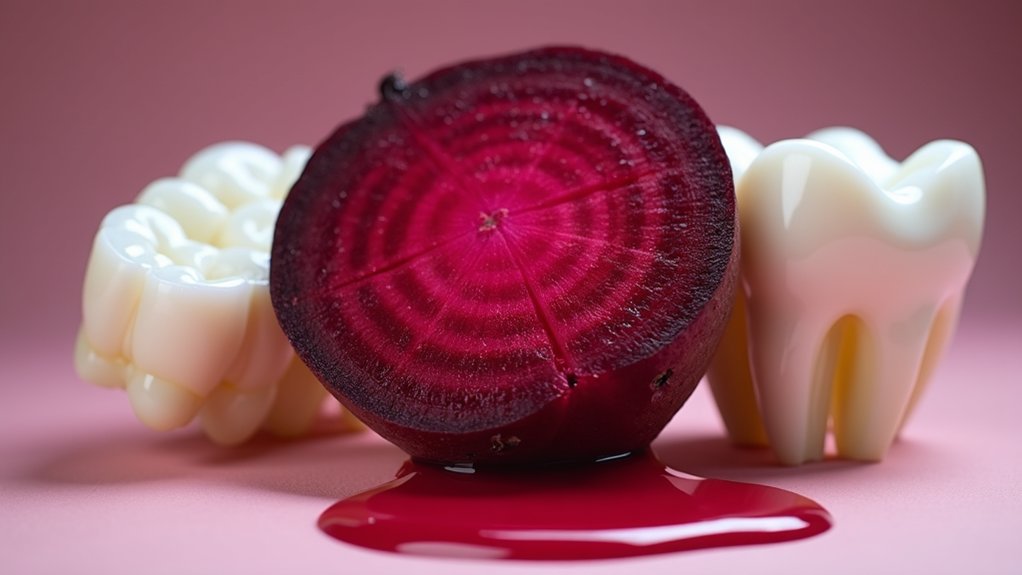
Although beets are a nutritious addition to your diet, their vibrant pigments, known as betalains, are responsible for staining teeth.
Beets are nutritious, but their vibrant betalains can stain your teeth.
These potent chromogens can easily adhere to your tooth enamel, especially if it’s already compromised. The deep purple-red color of beets, particularly in juice form, increases their staining potential.
Additionally, the acidic nature of beets can soften tooth enamel, making it more vulnerable to staining. To minimize the risk of stains, consider rinsing with water immediately after consuming beets.
This simple step can help wash away pigments before they’ve a chance to adhere and stain your teeth.
How Do You Remove Beet Stains From Your Teeth?
Wondering how to effectively remove beet stains from your teeth? Start by rinsing your mouth with water immediately after consuming beets to wash away pigments.
Regularly brushing your teeth with fluoride toothpaste is essential for maintaining a bright smile and tackling surface stains. If stains persist, consider using whitening toothpaste or at-home whitening kits for more effective results.
Additionally, using a straw when drinking beet juice can help minimize contact with your teeth, reducing the risk of staining.
For significant concerns, professional dental cleanings and whitening treatments offer the best options for removing those stubborn beet discolorations.
What Do You Do Right After Eating Beets?
After enjoying beets, it’s important to take immediate action to minimize any potential staining on your teeth.
Start by rinsing your mouth with water to help wash away pigments that may adhere to your teeth. Within 30 minutes, brush your teeth to effectively remove any color particles and reduce the risk of teeth staining.
If you’re drinking beet juice, consider using a straw to limit contact with your teeth. Eating crunchy fruits or vegetables, like apples or carrots, can also help scrub your teeth and remove surface stains.
Maintain regular dental hygiene practices to further protect against discoloration.
Why Choose SNOW Products For Stain Removal?
When it comes to removing tough stains like those from beets, SNOW products stand out for their effectiveness.
They’re specially formulated to be gentle on sensitive teeth, ensuring you can whiten without discomfort.
With SNOW, you get powerful stain removal that fits seamlessly into your routine.
Effective Stain Removal
If you’re looking for an effective solution to tackle stubborn stains from foods like beets, SNOW products stand out as a top choice. These whitening products are specifically designed to combat tough stains while protecting your enamel.
| Features | Benefits |
|---|---|
| LED Technology | Enhances whitening effectiveness |
| Gentle Formulation | Safe for sensitive teeth |
| Regular Use | Prevents future stain buildup |
With SNOW’s convenient at-home kits, you can easily incorporate stain removal into your daily routine, ensuring your teeth remain bright and healthy—even after enjoying nutritious foods like beets.
Gentle for Sensitive Teeth
Choosing SNOW products for stain removal is a smart decision, especially for those with sensitive teeth. These whitening products feature gentle formulas that effectively combat teeth staining without causing discomfort.
With a proprietary blend of ingredients, SNOW not only whitens but also strengthens enamel, making it ideal for delicate dental health. The at-home kits incorporate advanced LED technology, enhancing the whitening process while remaining safe for sensitive gums and teeth.
Users often see noticeable results quickly, proving the effectiveness of SNOW in tackling tough stains like those from beets, all while prioritizing comfort and care for your smile.
What Are the Benefits of Beets?
Beets offer a wealth of nutrients that contribute to your overall health, including potassium, iron, and fiber.
Their high nitrate content supports heart health by lowering blood pressure and improving blood flow, while also enhancing your athletic performance.
Incorporating beets into your diet can be a smart choice for both physical health and nutritional balance.
Nutritional Value Overview
Packed with essential nutrients, beets offer a multitude of health benefits that make them an excellent addition to your diet.
They’re low in calories yet high in crucial components like potassium, iron, folate, and dietary fiber. This nutritional value supports overall health and well-being.
Rich in antioxidants, particularly betalains, beets help combat oxidative stress and inflammation. Additionally, their nitrate content can enhance athletic performance by improving stamina and energy levels.
A half-cup serving delivers about 2 grams of protein and just 57 calories, making beets a nutrient-dense, healthy addition to meals for you and those you serve.
Heart Health Benefits
One of the standout benefits of incorporating beets into your diet is their positive impact on heart health. Beets are rich in nitrates, which convert to nitric oxide, helping to relax blood vessels and improve blood flow. Regular consumption can lower blood pressure and enhance endothelial function, reducing the risk of heart disease. Additionally, their antioxidants combat inflammation, supporting overall health.
| Benefit | Description | Impact on Health |
|---|---|---|
| Nitrates | Convert to nitric oxide | Improves blood flow |
| Antioxidants | Reduce inflammation | Supports heart health |
| Essential Nutrients | Potassium and folate | Crucial for cardiovascular function |
Beets won’t stain teeth either!
Athletic Performance Enhancement
When aiming to enhance athletic performance, incorporating beets into your diet can be a game-changer. Rich in dietary nitrates, beets convert to nitric oxide, improving blood flow and reducing oxygen costs during exercise.
Studies show consuming beetroot juice can boost endurance by up to 16%, helping you push through high-intensity workouts. You’ll likely experience increased stamina and reduced fatigue, making beets an ideal pre-workout choice.
Additionally, their antioxidant properties aid muscle recovery while supporting overall oral health. Just be mindful of potential staining; maintaining teeth healthy can be achieved with proper dental care after enjoying your beet-based meals.