
Yes, alcohol can stain your teeth. Beverages like red wine and dark liquors contain chromogens that cling to your enamel, causing discoloration. Additionally, the high sugar content in many alcoholic drinks promotes plaque buildup, which further compromises your oral health. To minimize staining, rinse your mouth with water between drinks and maintain good oral hygiene. If you want to know how to effectively reverse these discoloration effects, there’s more information available on that topic.
Key Takeaways
- Alcoholic beverages, especially red wine and dark liquors, contain chromogens that can lead to tooth discoloration.
- High sugar content in alcoholic drinks promotes plaque buildup, which can worsen tooth stains.
- Rinsing with water between alcoholic drinks can help mitigate staining effects on teeth.
- Good oral hygiene practices are essential for combating alcohol-related discoloration.
- Professional whitening treatments can effectively reverse the discoloration caused by alcohol consumption.
Why Teeth Get Stained
Many people don’t realize that the foods and drinks they enjoy can lead to tooth stains. Certain beverages, especially those with high sugar content, can contribute greatly to discoloration.
Drinks like soda, wine, and even some teas contain dark pigments and sugars that adhere to your teeth, fostering bacteria that cause further staining. Maintaining good oral hygiene is essential; promptly cleaning your teeth after consuming these items can mitigate staining effects.
Additionally, physical trauma or medications can compound discoloration. By being mindful of your choices and maintaining your oral health, you can keep your smile bright and healthy.
Does Alcohol Stain Teeth?
While enjoying a night out or a social gathering, you mightn’t consider that your favorite alcoholic beverages could be staining your teeth.
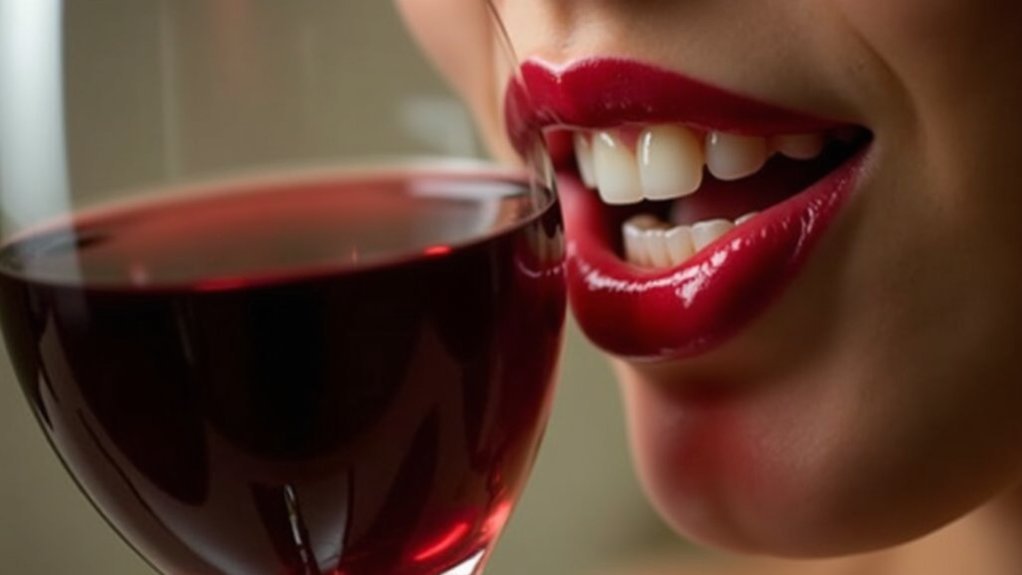
Alcohol consumption, especially red wine and dark liquors, contains chromogens that can adhere to your enamel, leading to tooth discoloration. The high sugar content in these drinks contributes to plaque buildup, which can harbor bacteria in your mouth, further compromising your oral health.
Alcoholic beverages, particularly red wine and dark liquors, can stain teeth and promote plaque buildup due to their chromogens and high sugar content.
To prevent stains, practice good dental care by rinsing your mouth with water between drinks and maintaining a consistent routine of brushing and flossing.
For personalized advice, consult your dentist for medical advice tailored to you.
Chromagen Discoloration
Chromagen discoloration can greatly impact the appearance of your teeth if you frequently consume colored beverages. These chromagens, found in drinks like red wine and dark sodas, can adhere to your tooth enamel, causing unsightly staining.
The excess sugar in alcoholic drinks can worsen the situation by promoting plaque buildup, which further traps chromagens on your teeth. Mixing alcohol with dark juices or sodas heightens the risk of discoloration due to their combined pigments.
To combat chromagen-related stains, it’s essential to maintain a good oral hygiene routine—rinse and brush your teeth after consuming these beverages to protect your smile.
How to Reverse the Effects of Discoloration
To effectively reverse the effects of tooth discoloration, consider a combination of professional treatments and diligent at-home care.
Visiting a dentist for whitening options can greatly restore your teeth’s color and improve oral health. These procedures typically involve applying bleach to the tooth surfaces, often enhanced by a light, and can last around 30 minutes.
To maintain that brightness, brush daily with hydrogen peroxide-based whitening toothpaste and schedule regular check-ups to monitor any discoloration issues.
How Tooth Whitening Works
Understanding how tooth whitening works can help you make informed decisions about your smile. The procedure involves applying a bleaching agent directly to your teeth, effectively lightening stains and discoloration.
A special light is often utilized to enhance the bleaching agent’s effectiveness, leading to quicker results. Typically, the entire professional whitening procedure lasts no more than 30 minutes, making it a convenient choice for immediate improvement.
Results can last for several years, depending on your oral hygiene practices and dietary choices. Innovative methods can lift deep stains, restoring your teeth’s natural appearance and enhancing overall oral aesthetics.