
Chlorine in swimming pools can damage your teeth by causing enamel erosion and increasing sensitivity. This happens when the pH level drops below safe limits due to chlorine, leading to discoloration and a greater risk of cavities. Additionally, prolonged exposure may result in swimmer’s calculus, a dark staining on teeth. To protect your dental health, it’s essential to manage your chlorine exposure effectively. You can discover more effective strategies to safeguard your teeth while swimming.
Key Takeaways
- Chlorine can cause enamel erosion in teeth, especially in pools with low pH levels.
- Prolonged exposure to chlorine may lead to increased tooth sensitivity and discoloration.
- High chlorine levels can result in swimmer’s calculus, which causes dark staining on teeth.
- Rinsing the mouth with fresh water after swimming helps restore pH balance and reduces chlorine’s effects.
- Regular dental check-ups are essential to monitor and manage chlorine-related dental health issues.
Why Is Chlorine Used in Water?
Chlorine is widely used in water treatment because it effectively eliminates harmful germs that can cause serious diseases. By using chlorine in drinking water and public pools, you greatly reduce the risk of waterborne illnesses.
Maintaining the right pH level, ideally between 7.2 and 7.8, guarantees the safety of chlorinated water. For pools, a chlorine concentration of at least 1 part per million is essential to protect swimmers’ health.
This careful balance not only safeguards public health but also helps protect your teeth from potential damage while swimming. Keeping these factors in mind supports overall oral health and well-being.
What Are the Effects of Chlorine on Your Teeth?
How does exposure to chlorinated water affect your teeth?
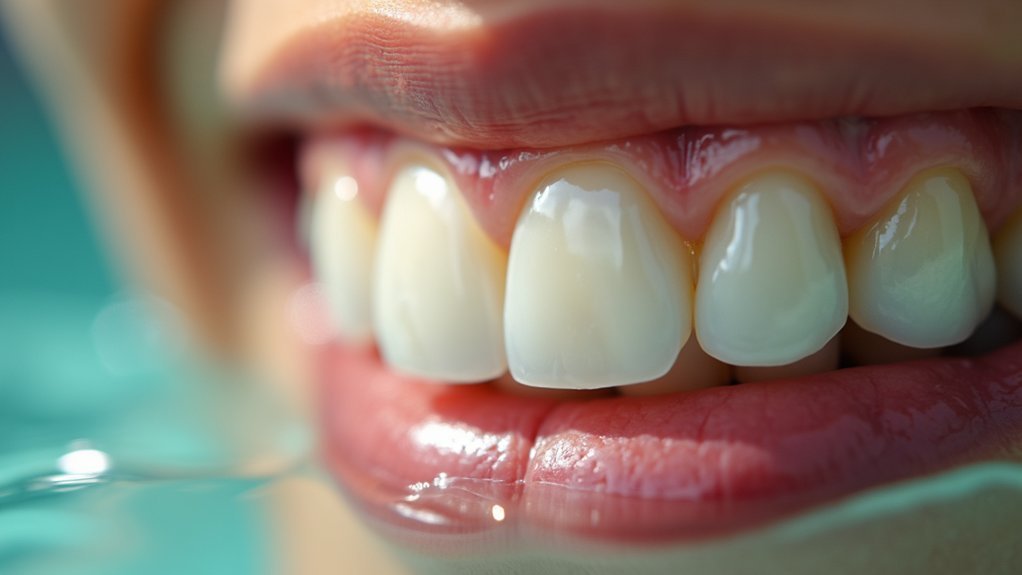
Chlorine can lead to enamel erosion, primarily due to lower pH levels in pools. This makes your teeth more susceptible to cavities and decay, resulting in increased sensitivity, discoloration, and transparency at the edges.
Chlorine exposure can erode enamel, increasing cavity risk and causing sensitivity and discoloration in teeth.
High chlorine levels may also cause swimmer’s calculus, leading to dark staining as chlorinated water disrupts normal salivary function.
To protect your dental health, keep your mouth closed while swimming and guarantee regular testing of pool pH, maintaining it between 7.2 and 7.8.
Practicing good oral hygiene is essential in mitigating chlorine’s damaging effects on your teeth.
How Do You Protect Your Teeth From Chlorine?
What steps can you take to safeguard your teeth from chlorine’s damaging effects?
First, keep your mouth closed while you swim in chlorinated water to minimize chlorine exposure, which can lead to enamel erosion.
Regularly check the pool’s pH balance, ensuring it stays between 7.2 and 7.8.
After swimming, rinse your mouth with fresh water to restore pH balance and wash away chlorine.
Avoid brushing your teeth immediately afterward; wait at least an hour.
Finally, use fluoride toothpaste to strengthen enamel.
For tailored advice, consult professional medical advice to enhance your oral hygiene routine.
Understanding Chlorine and Dental Health
While swimming can be a revitalizing activity, it’s important to understand the impact chlorine can have on your dental health.
Chlorine helps eliminate germs in swimming pools, but improper pH balance can lead to enamel erosion and tooth sensitivity. When pool water’s pH deviates from the ideal 7.2-7.8, you may experience increased risks of discoloration and discomfort with hot or cold foods.
Prolonged exposure to chlorinated water can also result in swimmer’s calculus, a staining issue.
To safeguard your oral hygiene, remember that regular check-ups are crucial for monitoring any chlorine-related damage and maintaining overall dental health.
Tips for Maintaining Oral Health While Swimming
To maintain ideal oral health while enjoying your time in the pool, it’s essential to adopt a few practical habits.
Keep your mouth closed while swimming to minimize chlorine exposure and reduce the risk of enamel erosion. After swimming, rinse your mouth with fresh water to restore pH balance and wash away chlorine residues.
Use fluoride toothpaste daily to strengthen enamel and combat chlorine’s effects. Schedule regular dental check-ups, especially after frequent swimming, to monitor for signs of enamel erosion.
Finally, limit the duration and frequency of swimming in chlorinated water to decrease its cumulative impact on your teeth.