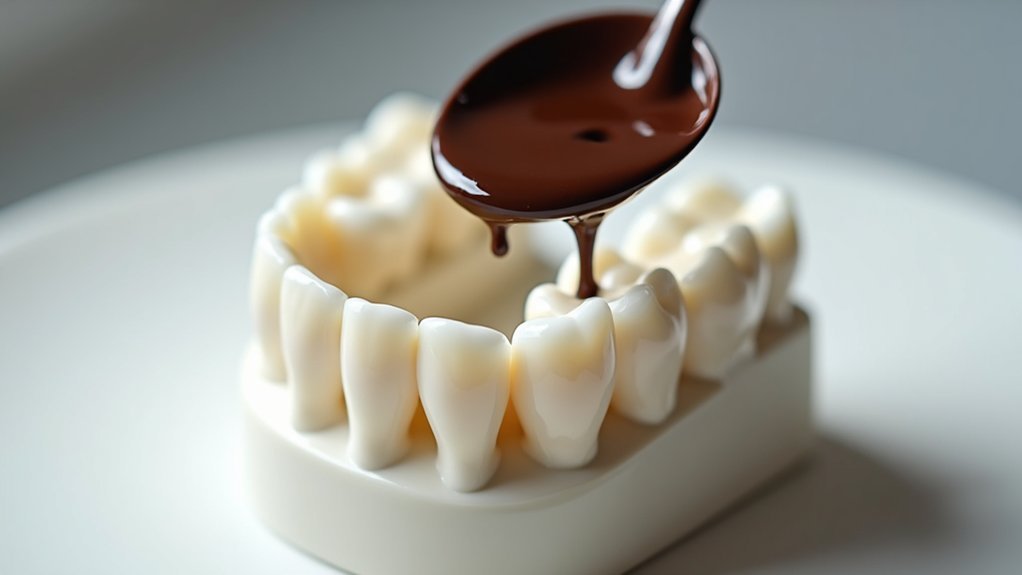

Yes, chocolate can stain your teeth, mainly due to tannins found in dark chocolate. These tannins can bond to tooth enamel, leading to discoloration over time. Although dark chocolate has a higher staining potential, its quick dissolving nature and lower sugar levels make it less harmful than sugary candies. Practicing good oral hygiene, like brushing within 30 minutes after consuming chocolate and drinking water, can help minimize staining. Curious about how to further protect your smile?
Key Takeaways
- Chocolate contains tannins that can cause mild staining, particularly with dark varieties due to higher cocoa content.
- Dark chocolate has a greater potential for staining compared to milk chocolate due to its higher tannin levels.
- Regular brushing about 30 minutes after consuming chocolate can prevent tannins from settling and minimize staining.
- Drinking water after eating chocolate helps wash away residue and reduces the risk of discoloration.
- Maintaining good oral hygiene and scheduling routine dental cleanings can help control and minimize staining effects.
The Surprising Relationship Between Chocolate and Teeth Staining
While you might enjoy indulging in chocolate, it’s important to understand its surprising relationship with teeth staining. Chocolate contains tannins, which can cause mild staining, especially with dark varieties.
However, unlike sticky candies, chocolate doesn’t linger on your teeth, making it easier to clean. To minimize staining, drink water after consuming chocolate and practice regular brushing about 30 minutes afterward. This helps prevent tannins from settling and causing deeper discoloration.
Is All Chocolate Created Equal? Understanding Dark vs. Milk Chocolate
When it comes to chocolate, not all options are alike.
Dark chocolate, with its higher cocoa content, offers nutritional benefits but also presents a greater potential for staining due to its tannin levels.
Meanwhile, milk chocolate, while often sweeter, poses its own risks for dental health with higher sugar content and less adherence to tooth enamel.
Nutritional Differences Explained
Understanding the nutritional differences between dark and milk chocolate can greatly impact your oral health choices.
Dark chocolate, with its high cocoa content (70% or more), boasts beneficial compounds and lower sugar levels, making it a healthier option. In contrast, milk chocolate generally has higher sugar and lower cocoa solids, increasing plaque buildup risks.
Dark chocolate contains tannins, which may help reduce acid levels in your mouth, offering protective benefits against cavities when consumed in moderation. Choosing high-quality dark chocolate can also limit sugar and additives, further supporting your teeth whitening efforts and overall oral health.
Staining Potential Comparison
As you consider the impact of chocolate on your teeth, it’s important to recognize that not all chocolate is created equal regarding staining potential.
Dark chocolate, with cocoa content ranging from 70% to 90%, contains more tannins, increasing its likelihood of staining over time.
In contrast, milk chocolate has higher sugar content, which can lead to plaque buildup and dental issues rather than direct staining.
While both types can affect your smile, dark chocolate‘s lower sugar may offer some oral health benefits, particularly if you choose higher-quality options with fewer additives to minimize staining risks.
Can Dark Chocolate Be A Culprit In Teeth Staining?
When it comes to dark chocolate, you mightn’t realize it can contribute to teeth staining.
The high levels of tannins can bond to your enamel, while its sugar content may lead to plaque buildup, increasing the risk of discoloration.
Practicing moderation and maintaining good oral hygiene are essential for protecting your smile.
Tannins and Enamel Interaction
Although dark chocolate is often praised for its health benefits, it can also be a culprit in teeth staining due to the presence of tannins.
These acidic polyphenols can bond to tooth enamel, leading to discoloration.
To minimize staining, consider the following:
- Rinse with water after consuming dark chocolate
- Maintain regular brushing and flossing
- Limit consumption of other tannin-rich foods
- Use a straw for dark chocolate beverages
- Schedule routine dental cleanings
Sugar’s Role in Staining
While tannins are a significant factor in the staining potential of dark chocolate, sugar also plays a critical role in this issue.
The sugar in dark chocolate contributes to plaque buildup, increasing the risk of staining over time. It fosters an environment for harmful bacteria, leading to acid production that damages your tooth enamel and promotes discoloration.
Frequent consumption can lead to cumulative sugar exposure, exacerbating staining when combined with tannins.
To mitigate these effects, maintaining good oral hygiene by brushing after enjoying dark chocolate is essential, protecting your teeth from potential stains and preserving their natural color.
Moderation and Oral Health
Moderation is essential when it comes to enjoying dark chocolate, as its potential to stain teeth can increase with excessive consumption.
While dark chocolate has dental benefits, you should be mindful of your intake. To maintain oral hygiene and minimize staining, consider these tips:
- Choose high-quality dark chocolate (70% cocoa or more).
- Enjoy dark chocolate in moderation to reduce staining risk.
- Brush your teeth after consuming chocolate to combat tannins.
- Drink water to help wash away residue.
- Maintain regular dental check-ups for ideal oral health.
What Role Do Tannins In Chocolate Play In Teeth Staining?
Tannins in chocolate play a significant role in teeth staining, as these acidic polyphenols can bond to your enamel and lead to discoloration over time.
Dark chocolate, with its higher cocoa content, contains more concentrated tannins, increasing the risk of staining compared to milk chocolate. These tannins can settle into your porous enamel, making your teeth more susceptible to discoloration.
However, they also help reduce acid levels in your mouth, benefiting overall oral health.
To minimize staining effects, maintain regular oral hygiene practices, such as brushing your teeth 30 minutes after consuming chocolate.
What At-Home Teeth Whitening Combats Chocolate Stains?
If you’re looking to combat chocolate stains on your teeth, at-home whitening solutions can be highly effective. Here are some options that can help restore your smile:
- SNOW’s Teeth Whitening Kit: Designed to target chocolate stains specifically.
- Whitening Toothpastes: Use SNOW’s Whitening Toothpaste for enhanced results.
- LED Whitening Kits: Accelerate stain removal more efficiently.
- Regular Dental Care: Incorporate at-home solutions into your routine after indulging in dark chocolate.
- Consistency: Regular use considerably minimizes the appearance of stains.
These methods can help maintain a bright smile even after enjoying your favorite chocolate treats.
Tips to Eat Dark Chocolate Without Staining Your Teeth
Enjoying dark chocolate doesn’t have to come at the expense of your dental health. Choose high-quality dark chocolate that often contains at least 70% cocoa, as it typically has less sugar.
After indulging, rinse your mouth with water to wash away any residue and minimize contact with your teeth. Pair dark chocolate with certain foods like cheese or crunchy fruits; these can help reduce acidity and stimulate saliva production, aiding in mouth cleansing.
Additionally, practice good oral hygiene by brushing twice daily and flossing to keep your teeth healthy and reduce the risk of staining.