
Replacing fillings can damage teeth if not done properly. However, when conducted by an experienced dentist, the process typically protects and preserves your dental health. Proper techniques help prevent complications such as microfractures or further decay. Regular monitoring and timely replacement of fillings guarantee better support for your teeth. It’s important to understand the signs that indicate a filling replacement is necessary and the best practices for maintaining your dental care. Discover more about this process and related topics.
Key Takeaways
- Replacing fillings can pose risks if not done properly, potentially leading to damage or increased decay in the tooth.
- Excessive drilling during the replacement process may cause microfractures in the tooth structure.
- Timely replacement of fillings can prevent more significant issues, such as new cavities, thereby protecting the tooth.
- Modern materials used for fillings, like composite resins, provide better support and reduce the risk of future damage.
- Regular dental evaluations help catch issues early, minimizing the need for invasive procedures during filling replacements.
Understanding Dental Fillings
When you have a cavity, dental fillings play an essential role in restoring your tooth’s shape and function.
Dental fillings are vital for restoring the shape and function of a cavity-affected tooth.
These fillings help combat tooth decay and can be made from materials like amalgam or composite resin. Depending on the material, existing fillings can last between 7 to 15 years.
Regular dental check-ups, including dental X-rays, are crucial for evaluating your filling needs and monitoring their condition.
Signs of deterioration, such as sensitivity or visible damage, may indicate a need for replacement. Addressing these issues promptly helps maintain your tooth structure and prevent further complications.
The Process of Replacing Fillings
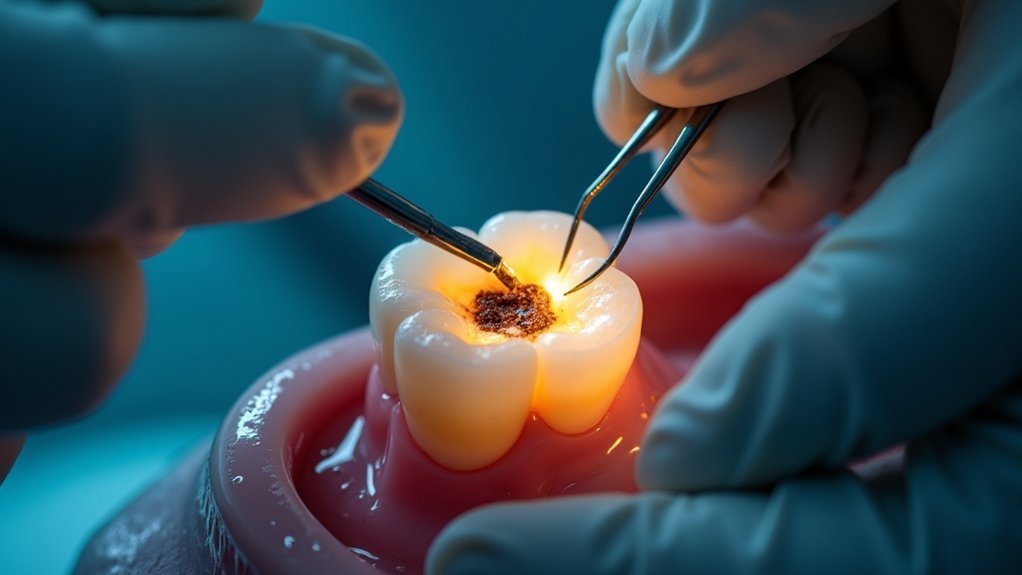
When you need a filling replaced, your dentist will carefully remove the old material using specialized tools, like dental drills.
It’s essential that they employ tooth preservation methods to minimize any damage to the surrounding structure.
After the removal, the dentist will assess the tooth for decay or damage before placing a new filling to guarantee your tooth’s integrity is restored.
Filling Removal Techniques
Replacing fillings involves a careful process where your dentist employs various techniques to guarantee minimal damage to your tooth.
They often use filling removal techniques like drilling, air abrasion, or laser dentistry to gently eliminate the old filling while preserving surrounding tooth structure. Local anesthesia is administered to numb the area, reducing discomfort during the procedure.
A rubber dam may be placed to maintain a dry environment, ensuring effective removal. After the old filling is taken out, your dentist will check for any dental decay and prepare the tooth for the new filling material, ensuring a proper fit and seal.
Tooth Preservation Methods
While replacing fillings, preserving the integrity of your tooth is paramount. Your dentist uses specialized tools to carefully remove old fillings, minimizing stress on surrounding tooth structure.
Techniques like laser dentistry specifically target areas with underlying decay, which helps preserve tooth integrity. Before placing new fillings, your dentist assesses the tooth for any damage, guaranteeing ideal dental health.
Regular dental check-ups are vital, as they allow for monitoring the condition of your fillings and the surrounding tooth structure. This proactive approach helps prevent further damage and guarantees that any necessary interventions occur in a timely manner.
Potential Risks and Benefits of Filling Replacement
When considering filling replacement, it’s essential to weigh both the risks and benefits.
While improper removal can damage surrounding tooth structure, timely replacement can prevent larger issues like new cavities.
Understanding these factors helps you make informed decisions about your dental health.
Risks of Replacement
Although replacing fillings can be necessary for maintaining dental health, it comes with certain risks that you should be aware of. Improper procedures might damage the tooth, introducing bacteria and increasing the risk of decay. Excessive drilling may lead to microfractures, resulting in future complications. Here’s a quick overview:
| Risk Factor | Potential Impact | Prevention Strategy |
|---|---|---|
| Excessive Drilling | Damage the tooth | Careful assessment |
| Bacterial Introduction | Increased decay | Proper sealing |
| Microfractures | Future complications | Minimize removal of material |
Being informed helps protect your oral health.
Benefits of Replacement
Understanding the risks associated with filling replacements is important, but it’s equally essential to recognize the numerous benefits these procedures offer.
Replacing old fillings can effectively prevent tooth decay by eliminating compromised materials that allow bacteria to invade. Skilled dentists aim to minimize any minor trauma during removal, preserving tooth structure.
Regularly maintaining healthy fillings not only strengthens your teeth but also reduces the likelihood of extensive restorations like crowns or root canals.
Additionally, you may experience improved comfort and decreased sensitivity with new composite fillings, enhancing both your quality of life and overall dental function.
How Replacing Fillings Can Protect Teeth
Replacing old fillings is essential for protecting your teeth, as it eliminates compromised material that can lead to further decay. When you replace fillings promptly, you help maintain the integrity of your tooth structure and reduce the risk of fractures. Modern dental materials, like composite resins, bond better, providing enhanced support. Regular evaluations can catch issues early, minimizing the need for invasive procedures. By proactively addressing old fillings, you can maintain peak dental health and avoid significant complications.
| Benefits of Replacing Fillings | Key Points |
|---|---|
| Prevent further decay | Eliminates compromised material |
| Protect tooth structure | Maintains integrity and strength |
| Use modern dental materials | Enhances bonding and support |
| Reduce invasive procedures | Catches issues early |
| Maintain peak dental health | Prevents complications |
Signs That Indicate a Filling Replacement Is Necessary
When you notice increased sensitivity to hot or cold, it might be a sign that your filling is compromised and needs replacement.
Look for visible damage, such as chips, cracks, or holes, which can indicate deterioration. Additionally, if you feel pain while chewing or biting, it’s essential to have your filling evaluated promptly.
Regular dental check-ups are vital, as they help detect hidden decay under fillings that may not show symptoms until significant damage occurs.
If your amalgam filling has cracks or leaks, bacteria can enter, leading to new decay and emphasizing the importance of timely replacement.
Alternatives to Silver Fillings
If you’re looking for a more aesthetically pleasing option than traditional silver fillings, there are several effective alternatives available.
Tooth-colored composite fillings are ideal for small to mid-sized cavities, blending seamlessly with your natural teeth.
Tooth-colored composite fillings offer an aesthetic solution for small to mid-sized cavities, harmonizing beautifully with your natural teeth.
For larger cavities, inlays and onlays provide a custom fit and enhanced durability.
If a tooth is extensively damaged, dental crowns can restore teeth by capping the entire tooth, offering protection and strength.
While these alternatives may have a shorter lifespan compared to silver fillings, they address both cosmetic and practical concerns in dental restoration, making them popular choices in cosmetic dentistry.
Importance of Regular Dental Check-Ups
Regular dental check-ups are essential for maintaining your oral health, as they allow your dentist to monitor the condition of your existing fillings and identify potential issues early on.
By visiting your dentist regularly, you enable early intervention, which can prevent serious problems like hidden decay that may not be visible without X-rays.
The American Dental Association recommends biannual visits to guarantee overall oral health and preserve tooth structure.
Consistent evaluations help maintain the integrity of your fillings and reduce the risk of complications, ultimately supporting a healthier, more confident smile.
Prioritize your check-ups for ideal dental care.