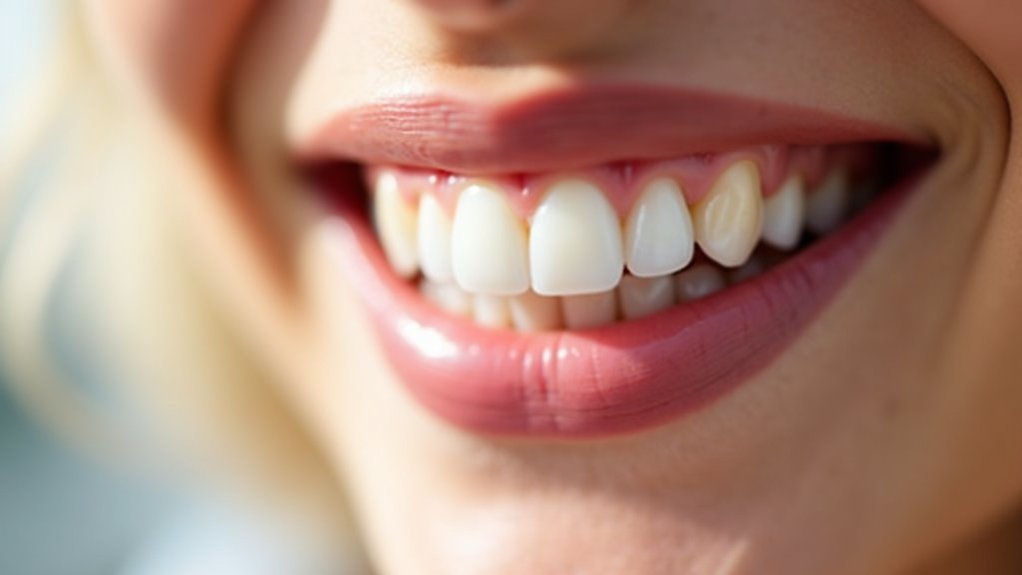

Your teeth should align so that the upper front teeth slightly overlap the lower ones by about 2 mm, ensuring efficient biting and proper occlusion. The upper arch needs to be wider than the lower arch. The alignment forms a smooth curve, similar to the St. Louis Arch. About 20-30% vertical overlap is ideal. Proper alignment enhances aesthetics and oral health, preventing future complications. Discover more about maintaining and achieving perfect alignment.
Key Takeaways
- Upper front teeth should slightly overlap lower teeth by about 2 mm for ideal bite alignment.
- The upper arch must be wider than the lower arch to enhance proper alignment and function.
- Teeth should follow a smooth curve, resembling the St. Louis Arch, for optimal aesthetic appearance.
- Vertical overlap between upper and lower teeth should range from 20-30% to ensure effective chewing.
- Proper alignment prevents dental complications, improves oral hygiene, and facilitates clear speech.
Understanding Perfect Teeth Alignment and Occlusion
When it comes to perfect teeth alignment, understanding dental occlusion is vital. An ideal bite occurs when your upper and lower arches interlock properly, allowing for efficient chewing and balanced pressure distribution.
The overjet and overbite should ideally measure 2-3 mm and 1-2 mm, respectively. Aesthetic alignment features larger central incisors tapering down to canines, promoting facial symmetry.
However, nearly 75% of the population suffers from misaligned teeth, which can disrupt alignment and function, leading to complications like crossbites. Recognizing these factors is vital for determining appropriate orthodontic treatment to achieve desired teeth alignment and occlusion.
Ideal Teeth Positioning
Achieving ideal teeth positioning is essential for both aesthetic appeal and functional efficiency. Your teeth should fit seamlessly, ensuring proper biting and a healthy bite. The upper front teeth should slightly overlap the lower by about 2 mm, while the upper arch remains wider than the lower. For optimal alignment, teeth should follow a smooth curve, resembling the St. Louis Arch. The vertical overlap of upper to lower teeth should be between 20-30%, promoting efficient occlusion. This positioning not only enhances appearance but also reduces future dental complications.
| Aspect | Ideal Measurement | Functionality |
|---|---|---|
| Vertical Overlap | 20-30% | ideal occlusion |
| Arch Width | Upper wider than lower | Aesthetic appeal |
| Tooth Alignment | Flowing curve | Prevents uneven wear |
Common Issues Affecting Teeth Alignment
Teeth alignment can be greatly impacted by various common issues, each posing unique challenges to oral health and aesthetics.
Gaps between teeth, known as diastemas, can hinder efficient chewing and lead to aesthetic concerns.
Overcrowding often results from insufficient space during eruption, complicating cleaning and increasing cavity risk.
A deep bite occurs when the upper teeth excessively cover the lower ones, causing jaw strain and discomfort.
Crossbite leads to uneven wear, while rotated teeth commonly emerge during childhood, necessitating orthodontic care.
Addressing these issues is essential for maintaining ideal teeth alignment and overall oral function.
Variations in Teeth Alignment
Variations in teeth alignment can greatly influence both function and aesthetics, affecting how you bite and chew. Proper alignment guarantees that teeth are supposed to fit together correctly.
Misaligned teeth can lead to issues like underbites, where top teeth sit behind the lower, or crossbites, where bottom teeth misalign with top ones. Deep bites, characterized by upper teeth that completely overlap the lower, can cause excessive wear and jaw discomfort.
With about 75% of the global population experiencing some form of misalignment, understanding these variations is vital for maintaining dental health and function.
Importance of Proper Teeth Alignment
Proper teeth alignment is essential for your oral health and overall functionality.
When your teeth are aligned correctly, you experience improved comfort while chewing and reduced risk of dental issues.
Additionally, it makes maintaining oral hygiene easier, ultimately enhancing your smile and well-being.
Enhanced Oral Health
Achieving ideal teeth alignment plays an essential role in enhancing your oral health. Proper teeth alignment guarantees a healthy bite, allowing for efficient chewing and digestion while preventing tooth decay.
When your teeth are correctly positioned, oral hygiene practices become more effective, making it easier to clean and reducing plaque buildup. Additionally, optimal alignment contributes to clear speech by facilitating proper pronunciation.
Misaligned teeth can lead to uneven wear, muscle strain, and discomfort, potentially resulting in headaches and TMJ disorders. Maintaining ideal teeth alignment is vital for both your dental health and overall well-being.
Improved Functionality and Comfort
When teeth are properly aligned, they not only enhance your smile but also considerably improve functionality and comfort.
A perfect bite guarantees that your teeth meet correctly, allowing for efficient chewing and digestion. This alignment reduces the risk of uneven wear, promoting long-term oral health.
Additionally, it aids in clear speech by facilitating proper tongue movement, essential for articulating sounds.
When your teeth are aligned, you also minimize muscle strain and discomfort associated with severe alignment issues and TMJ disorders.
Ultimately, ideal positioning makes dental hygiene simpler, decreasing the risk of cavities and gum disease.
Orthodontic Treatment for Misaligned Teeth
Orthodontic treatment for misaligned teeth focuses on improving your bite alignment, making eating more comfortable and effective.
You have options like traditional braces and clear aligners to address specific issues, such as overcrowding and gaps.
Early intervention is essential, as timely consultations can prevent more serious alignment problems down the line.
Treatment Goals and Benefits
While misaligned teeth can lead to a range of issues, orthodontic treatment focuses on correcting these problems to achieve ideal bite alignment and enhance overall oral health.
Effective teeth alignment guarantees your upper and lower teeth fit together properly, facilitating comfortable eating and reducing strain. It also minimizes the risk of uneven wear and tooth decay.
Treatments like braces or clear aligners offer customized solutions that greatly improve aesthetics and quality of life.
Post-treatment, maintaining ideal alignment with retainers is essential to preserve results and prevent teeth from shifting back, guaranteeing lasting benefits for both function and appearance.
Types of Orthodontic Options
Correcting misaligned teeth requires a variety of orthodontic options tailored to individual needs.
Common treatments include traditional braces, which use metal brackets and wires to gradually shift teeth into proper alignment, enhancing your bite and aesthetics.
Alternatively, clear aligners offer a discreet, removable solution that can effectively straighten upper front teeth without the visibility of metal.
In severe cases, surgical intervention may be necessary alongside orthodontic treatment to address skeletal issues.
After treatment, retainers help maintain your teeth’s new position, ensuring long-term success.
Consulting with an AAO orthodontist will guide you in selecting the best option for your unique alignment challenges.
Importance of Early Intervention
Addressing misaligned teeth early can greatly impact a child’s dental health and overall development.
Early intervention is essential for preventing more severe dental issues down the line. An orthodontic evaluation by age 7 can optimize treatment outcomes, guiding jaw growth effectively.
Benefits include:
- Improved long-term oral health
- Enhanced speech development
- Reduced risk of future dental complications
- Prevention of harmful habits like thumb sucking
- Shorter, less invasive treatment times
Teeth Alignment Methods
When it comes to aligning teeth, several effective methods are available to suit different needs and preferences.
Traditional braces utilize metal brackets and wires to gradually adjust the position of the teeth, making them suitable for thorough teeth alignment.
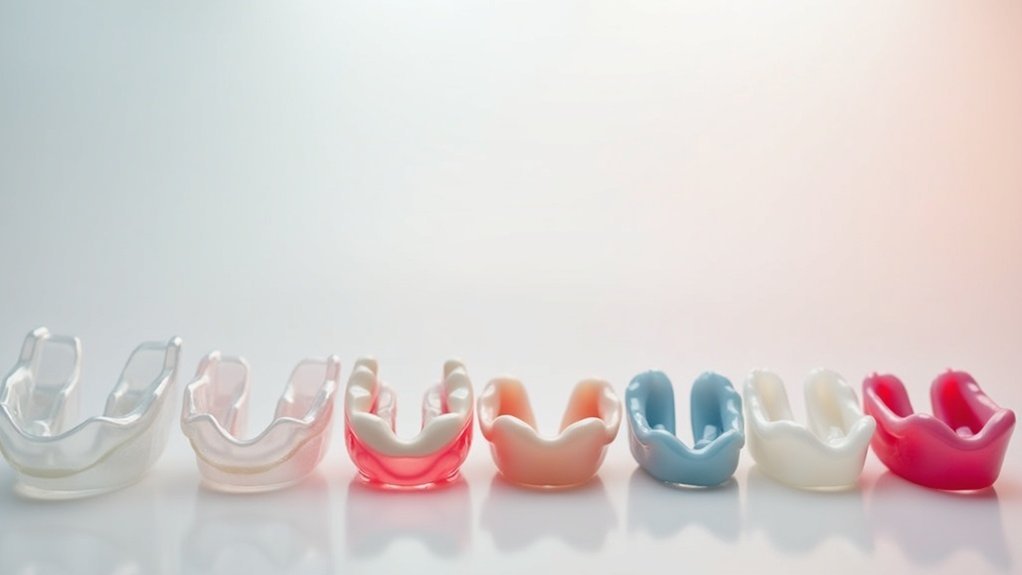
Clear aligners, like those from Invisalign, offer a discreet, custom solution to correct the upper arch without the visibility of metal.
Clear aligners provide a nearly invisible, personalized approach to achieving a beautifully aligned smile.
For complex cases, a combination of these methods may be necessary to achieve ideal results.
After treatment, retainers help maintain the new position of the teeth.
In severe instances, surgical options might be required for proper alignment and function.
Where to Get the Perfect Bite in Richmond, VA
Finding the perfect bite in Richmond, VA, is easier than you might think. Bates Orthodontics offers tailored solutions for all ages to guarantee your teeth are positioned correctly.
Their focus on all-encompassing care emphasizes early treatment for children, helping to achieve an upper arch that’s slightly aligned with the lower front teeth.
- Free orthodontic consultations
- Traditional braces and clear aligners
- Customized treatment plans
- Emphasis on proactive care
- Support for long-term dental health
With their expertise, you can achieve the perfect bite, enhancing chewing efficiency and speech clarity for a healthier smile.