
Rubber bands can move teeth efficiently when used consistently, applying targeted pressure that gradually shifts teeth into alignment. You should wear them for 20 to 24 hours daily for ideal results, as inconsistent use can slow progress. Typically, initial movements may be observed within 4 to 6 weeks, while overall treatment can take 1 to 6 months. Factors like type of rubber bands and individual circumstances play a role in speed. Discover more about optimizing your treatment outcomes.
Key Takeaways
- Rubber bands can show initial tooth movement within 4 to 6 weeks of consistent wear.
- Significant results are often noticeable in 1 to 3 months, depending on bite severity.
- Consistent wear of 20 to 24 hours daily is crucial for effective tooth movement.
- Treatment duration can range from 1 month to 6-8 months based on individual cases.
- Regular orthodontist check-ups help monitor progress and adjust treatment plans as needed.
Understanding the Mechanism of Rubber Bands
When you wear rubber bands in orthodontic treatment, they exert continuous pressure on your teeth, which helps them shift gradually into the desired position.
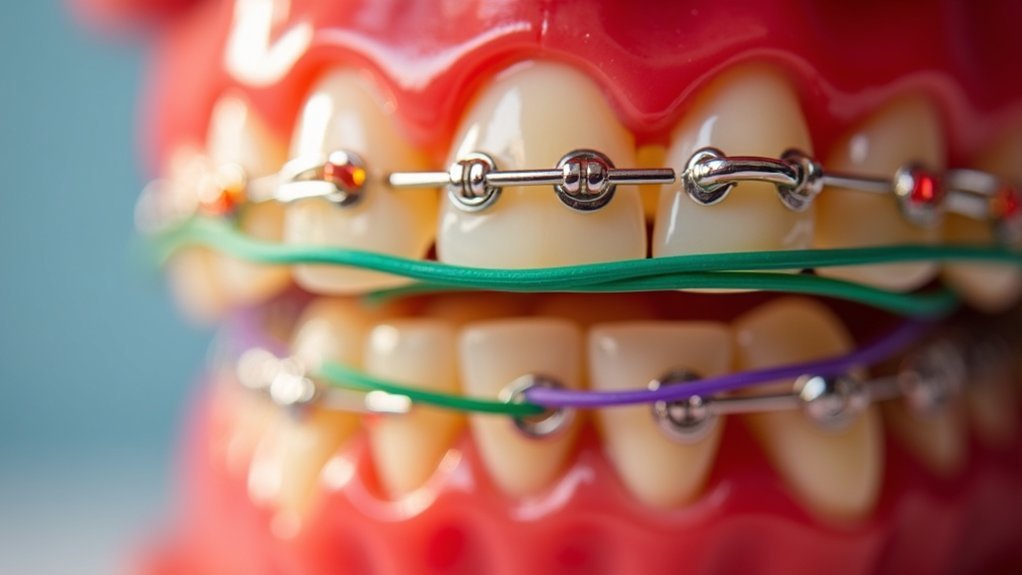
Rubber bands move your teeth by applying targeted force, allowing for precise adjustments to correct your bite. Their effectiveness depends on proper placement on brackets, guaranteeing the right teeth are influenced.
Rubber bands apply targeted force for precise tooth movement, ensuring effective correction of your bite through proper bracket placement.
Adhering to your orthodontist’s treatment plans is vital, as consistent wear accelerates the movement process. Typically, you’ll notice changes within weeks to months.
Regular monitoring by your orthodontist verifies your progress is assessed, enabling necessary adjustments for ideal results in achieving your perfect smile.
Factors Influencing the Speed of Tooth Movement
When you’re using rubber bands for orthodontic treatment, several factors can impact how quickly your teeth move.
The type of rubber bands you choose, the duration you wear them daily, and your individual treatment plan all play essential roles in the speed of tooth movement.
Understanding these elements can help you maximize the effectiveness of your orthodontic adjustments.
Type of Rubber Bands
Rubber bands play an essential role in orthodontic treatment, directly influencing the speed of tooth movement. The type of rubber bands you choose can greatly affect treatment time.
For instance, triangle rubber bands target canine alignment, while Class II and Class III bands address anterior open bites and midline deviations, respectively. Cross elastic bands apply pressure across the jaw to correct crossbites, impacting how effectively they move teeth.
Individual factors, like age and bone density, also play a role. Understanding the specific function of each rubber band type helps optimize your treatment for efficient and effective tooth movement.
Duration of Wear
To achieve ideal tooth movement, consistent wear of rubber bands is essential, typically ranging from 10 to 24 hours per day.
The effectiveness of your treatment largely depends on how diligently you wear rubber bands. Factors influencing the speed of tooth movement include:
- Severity of your bite issue
- Individual response to treatment
- Duration of rubber band wear
- Regular monitoring by your orthodontist
Wearing your elastics less than 12 hours a day may lead to minimal improvement.
Full-time wear is vital to move your teeth efficiently and reduce overall treatment time, ensuring best results in alignment.
Individual Treatment Plan
While many factors influence the speed of tooth movement during orthodontic treatment, individual treatment plans play a crucial role.
Your age greatly affects how quickly your teeth move; younger patients usually adapt faster due to their bone structure.
The type of rubber bands you use also matters, as different classes target specific alignment issues.
Adhering to prescribed wear times—ideally 20-24 hours daily—can enhance progress.
Additionally, the overall health of your teeth and gums can impact efficiency.
Finally, the complexity of your case determines treatment duration; severe bite issues may require extended use of rubber bands for best results.
Typical Timeline for Achieving Results
When using rubber bands for orthodontic treatment, you’ll typically see initial tooth movement within 4 to 6 weeks.
The overall duration for achieving your desired results can vary, generally ranging from 1 month to 6-8 months, depending on various factors like bite complexity and your commitment to consistent wear.
Regular monitoring with your orthodontist is essential to guarantee your treatment stays on track and adjustments are made as needed.
Average Treatment Duration
Rubber bands can show noticeable results in as little as 1 to 3 months, depending on the severity of your bite issue.
Most patients typically wear rubber bands for 1 to 8 months, with adjustments based on individual progress.
To guarantee optimal outcomes, consider the following:
- Aim for 10 to 12 hours of wear daily.
- Full-time wear may be necessary for some cases.
- Inconsistent wear can extend your treatment duration.
- Regular check-ups with your orthodontist are essential for tracking progress and making adjustments to your treatment plan to achieve the correct bite effectively.
Factors Affecting Progress
Achieving results with rubber bands is influenced by several key factors that determine the typical timeline for tooth movement.
Typically, you can expect progress within 1 to 6-8 months, depending on the severity of your bite issue. Consistent wear of the rubber bands—ideally 10-12 hours or 24 hours daily—is essential for faster results.
Additionally, your individual treatment plans and the specific types of rubber bands used can impact the duration of treatment. Factors like your age, oral health, and adherence to your orthodontist’s instructions also play significant roles in your progress.
Regular assessments will guarantee ideal results.
Monitoring With Orthodontist
Monitoring your progress with an orthodontist is essential for ensuring effective treatment with rubber bands. The timeline for achieving results typically ranges from 1 to 6-8 months, depending on your bite issue’s severity. Regular check-ups help assess treatment progress and allow for adjustments.
- Consistent wear of rubber bands accelerates results
- Communicate discomfort or side effects promptly
- Expect estimates on tooth movement speed based on individual factors
- Inconsistent use may delay overall treatment
Prioritize these aspects to optimize your orthodontic journey and achieve the best outcomes with your rubber bands.
Importance of Consistent Wear
While it might be tempting to occasionally skip wearing your rubber bands, consistent wear is crucial for effective tooth movement and alignment. You must wear them for 20 to 24 hours daily to see significant progress. Inconsistent use can extend your treatment duration and hinder results.
| Wear Duration | Result | Impact on Treatment |
|---|---|---|
| Less than 12 hours | Minimal Improvement | Longer Treatment Time |
| 12-20 hours | Moderate Progress | Average Treatment Time |
| 20-24 hours | Best Results | Shorter Treatment Time |
Maintaining compliance guarantees faster correction of bite issues and better outcomes.
Common Misconceptions About Rubber Bands
Despite common beliefs, rubber bands aren’t a quick fix for misaligned teeth; they require consistent wear over weeks or months for effective results.
Here are some misconceptions:
- Wearing rubber bands for shorter periods won’t yield similar results.
- Rubber bands aren’t just for kids; adults use them too.
- Doubling up on rubber bands can damage teeth.
- You can’t remove rubber bands for meals without impacting treatment.
To correct your alignment, you need to wear rubber bands as directed.
Understanding these misconceptions helps guarantee effective orthodontic treatment and better outcomes for those you serve.
Monitoring Progress With Your Orthodontist
Regular check-ups with your orthodontist are essential for ensuring your rubber bands effectively guide your teeth toward proper alignment.
During these appointments, your orthodontist monitors progress by evaluating tooth movement based on wear time and compliance with elastic usage. They may use photographs and X-rays to visually track changes, ensuring the rubber bands are correcting bite issues.
Your orthodontist will provide feedback on wear time and adjust your treatment plan as needed, considering your unique progress.
Consistent communication about any discomfort or issues with rubber bands helps optimize treatment outcomes, ensuring your journey to a straighter smile remains on track.