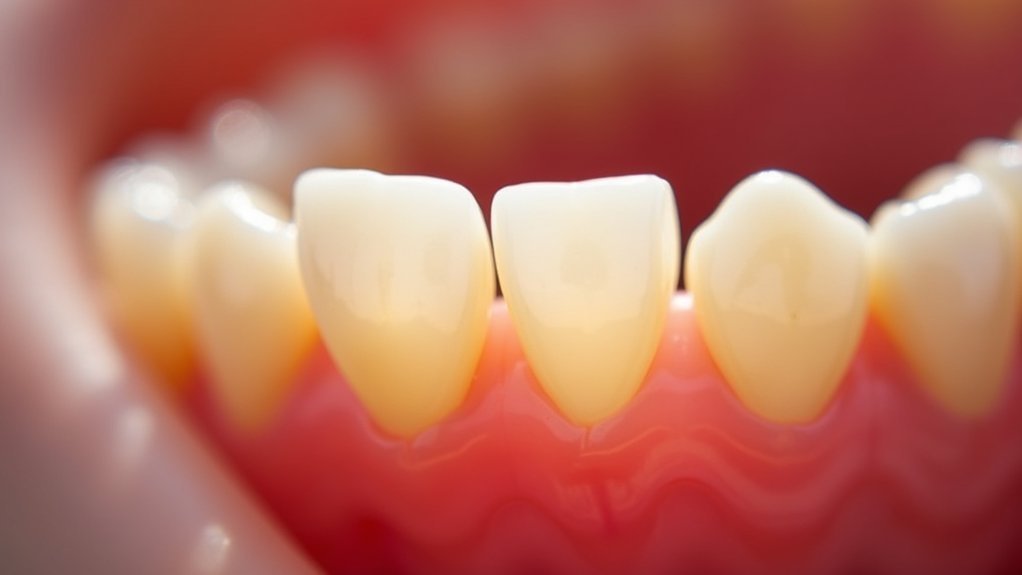

Wisdom teeth typically take a few weeks to several months to fully erupt. Most people see full emergence by their early twenties, but eruption can start as early as 16 or as late as 30. Several factors, like genetics and jaw size, can influence this timing. As they move through the jawbone and break through the gumline, you may experience discomfort. Understanding the complete process can help manage expectations and discomfort during this dental milestone.
Key Takeaways
- Wisdom teeth typically begin to erupt between the ages of 17 and 25, with an average emergence around 21 years.
- The eruption process can take weeks to months for uncomplicated cases to fully emerge through the gumline.
- Impacted wisdom teeth may remain trapped and require dental intervention, potentially delaying the eruption process indefinitely.
- Some individuals may experience eruption as early as 16 or as late as 30, influenced by genetics and jaw size.
- Signs of eruption include pain, swelling, and pressure in the back of the mouth, indicating the teeth are moving.
What Are Wisdom Teeth?
Wisdom teeth, or third molars, are the last set of adult teeth to emerge, typically making their appearance between the ages of 17 and 25. Most people have four wisdom teeth, one in each corner of the mouth.
Historically, these teeth were advantageous for our ancestors with larger jaws, but modern jaw sizes have rendered them largely vestigial. Eruption can vary; some face straightforward emergence, while others experience complications like impaction or overcrowding.
Regular dental check-ups are essential for monitoring their development and evaluating the need for extraction to maintain ideal oral health and prevent issues such as tooth decay or infection.
When Do Wisdom Teeth Typically Erupt?
Wisdom teeth typically start to erupt between the ages of 17 and 25.
This process can take several weeks to months, with each tooth going through distinct stages of emergence.
Understanding these timeframes and stages is essential for monitoring your dental health.
Eruption Age Range
Most people can expect their wisdom teeth to start erupting between the ages of 17 and 25, marking a significant change into adulthood. The average age for full emergence is around 21 years, but the eruption process varies widely:
- Some may see wisdom teeth erupt as early as 16 or as late as 30.
- Genetics and jaw size influence the age of eruption and the potential for complications, like impacted wisdom teeth.
- Not everyone develops all four wisdom teeth, affecting overall oral health.
Understanding this age range helps you prepare for any necessary dental evaluations or interventions.
Eruption Process Stages
Eruption of the third molars typically unfolds in distinct stages, beginning with initial movement within the jawbone.
Wisdom teeth usually start to break through the gums between ages 17 and 25, with full emergence often around 21. This eruption process can span several months to years, influenced by genetics, jaw space, and existing teeth.
While some teeth may fully emerge in weeks, impacted teeth might take months or may not erupt at all.
Regular dental check-ups are vital to monitor progress and maintain your oral health, addressing any complications that may arise during this critical period.
Stages of Wisdom Tooth Eruption
Three distinct stages characterize the process of wisdom tooth eruption.
Initially, the tooth begins to move within the jawbone, influenced by factors like genetics and jaw size.
Next, it breaks through the gumline, which can lead to discomfort.
Finally, the tooth settles into its proper position, a process that may take months to years.
- Uncomplicated cases fully emerge within weeks to months.
- Impacted wisdom teeth may remain trapped, risking oral health.
- The average eruption age is between 17 and 25, but many may not have wisdom teeth at all.
Signs That Your Wisdom Teeth Are Coming In
As your wisdom teeth begin to emerge, you might notice several signs indicating their arrival.
Common signs and symptoms include pain and discomfort in the back of your mouth, often accompanied by swelling or redness in the gum tissue. You may feel increased pressure, which can lead to crowding of adjacent teeth.
Additionally, bad breath or a foul taste might arise due to bacteria accumulation, especially if the gum flaps around a partially erupted tooth become infected.
Look for small white specks on the gum line, signaling possible injury. Ignoring these signs could mean delaying treatment and increasing complications.
Factors Influencing Eruption Timing
Several factors can influence when your wisdom teeth erupt.
Genetics play a key role, as family history may dictate whether you experience early or late emergence.
Additionally, the size of your jaw and existing oral health conditions can greatly impact the eruption process and potential complications.
Genetic Factors Impacting Eruption
Genetic factors greatly influence the timing of wisdom tooth eruption, shaping when and how these teeth emerge in your mouth. Understanding these influences can help you anticipate potential complications.
Consider the following:
- Family history can indicate your eruption age, reflecting patterns in relatives.
- Genetic makeup affects jaw size, impacting space for wisdom teeth and risk of impaction.
- Certain genes regulate teeth development, influencing when wisdom teeth begin moving in the oral cavity.
Jaw Size Considerations
Jaw size plays a significant role in the timing and ease of wisdom teeth eruption. Smaller jaws often limit the space available, leading to impaction or delayed eruption.
Genetics influences jaw size, affecting both eruption timing and tooth positioning. A spacious, well-aligned jaw can facilitate quicker, less painful emergence of wisdom teeth, while limited space may prolong the process and cause discomfort.
Individuals with larger jaws typically experience a smoother eruption, requiring less intervention.
Regular dental assessments can help monitor jaw development and predict complications, ensuring proper oral hygiene and proactive management of wisdom teeth issues.
Oral Health Conditions
Oral health conditions greatly influence the timing of wisdom teeth eruption, as issues like gum disease or cavities can create an unfavorable environment for these teeth to emerge.
Factors affecting the eruption include:
- Misaligned or overcrowded adjacent teeth, increasing the risk of impaction.
- Genetics, where a family history of delayed eruption may predict similar outcomes for you.
- A small jaw size, which limits space and raises the likelihood of common complications.
Regular dental evaluations are essential to monitor your oral health, address pre-existing conditions, and manage potential risks associated with the eruption of wisdom teeth.
Managing Pain and Discomfort During Eruption
As your wisdom teeth begin to erupt, managing the associated pain and discomfort is essential for your overall well-being. You can rely on over-the-counter pain relievers like ibuprofen or acetaminophen to alleviate wisdom tooth pain. Regularly rinsing with saltwater can also help reduce swelling and soothe irritated gums. Maintaining excellent oral hygiene is imperative for infection prevention and minimizing discomfort during this eruption process.
| Method | Benefits | Additional Notes |
|---|---|---|
| Over-the-counter relievers | Reduces pain and discomfort | Consult a dental professional if pain persists |
| Saltwater rinses | Soothes gums and reduces swelling | Use warm water for best results |
| Good oral hygiene | Prevents infection | Brush gently around the area |
When to Seek Dental Assistance
Recognizing when to seek dental assistance during the eruption of wisdom teeth is essential for preventing complications. Pay attention to these signs:
- Persistent or severe pain in the back of your mouth as the wisdom tooth emerges.
- Swelling, redness, or tenderness in the gums surrounding the emerging tooth.
- Difficulty opening your mouth or chewing due to discomfort, indicating a possible positioning issue.
If you notice signs of infection, such as bad breath or fever, don’t hesitate to seek immediate dental care.
Regular dental check-ups are vital for monitoring your oral health during this process and addressing any complications early.