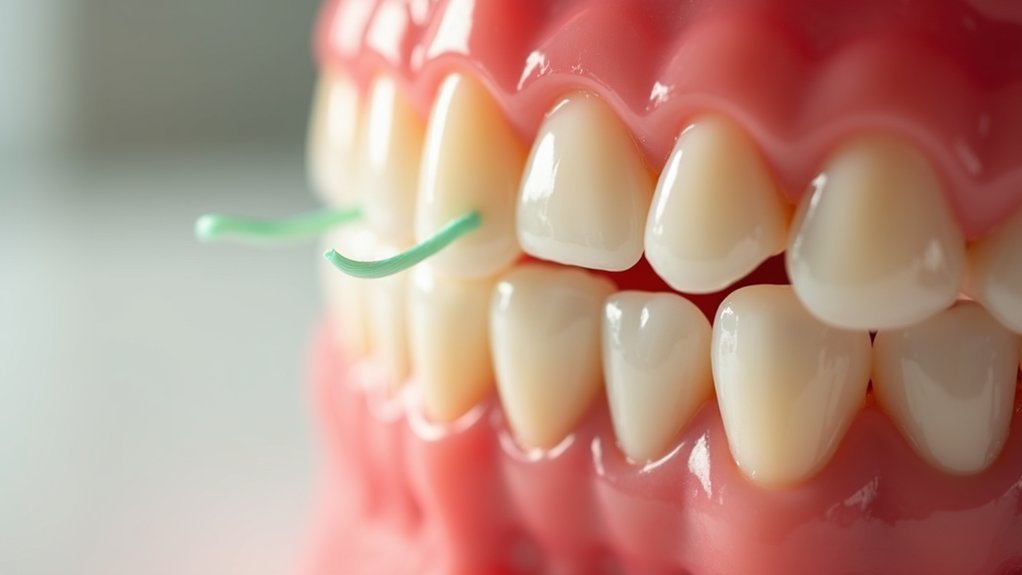

Flossing with a gap between your teeth and implant is essential for preventing plaque buildup and maintaining your oral health. Use 12 to 18 inches of dental floss, forming a gentle C shape around the implant. Floss at least twice daily, avoiding aggressive motions that can damage gum tissue. Consider using floss threaders or water flossers for easier access, especially in hard-to-reach areas. Discover more about effective tools and techniques for ideal implant care and hygiene.
Key Takeaways
- Use a floss threader to easily maneuver floss through gaps and around implants for effective cleaning without shredding.
- Floss at least twice daily, forming a gentle C shape around the implant to maintain gum health.
- Consider using a water flosser to dislodge food particles and bacteria effectively from hard-to-reach areas.
- Avoid aggressive flossing motions to prevent damage to the peri-implant tissue and maintain the integrity of the implant.
- Schedule regular dental check-ups for professional cleanings and personalized advice on maintaining your implants and oral hygiene.
Importance of Flossing With Dental Implants
When you have dental implants, it’s essential to prioritize flossing as part of your daily oral hygiene routine.
Flossing dental implants helps prevent plaque buildup and reduces the risk of peri-implantitis, which can jeopardize your implant’s longevity. Daily flossing effectively removes food particles and bacteria that accumulate in the gaps between your natural teeth and implants, promoting overall oral health.
Flossing dental implants is crucial for preventing plaque buildup and ensuring their long-term health.
Using proper techniques, like a floss threader, guarantees thorough cleaning, as implants aren’t fused to the gums.
Regularly monitor your flossing habits and consider alternatives, like water flossers, to enhance implant maintenance and support their durability.
Understanding the Gap Between Teeth and Implants
Flossing is essential for maintaining oral health, especially when dental implants are involved. Gaps between your natural teeth and implants can trap food particles and plaque, increasing the risk of peri-implantitis. Traditional floss may shred in these areas, making it less effective. Instead, consider using a water flosser or a floss threader to navigate these gaps gently. Regular flossing around dental implants promotes gum health and extends the longevity of your implants.
| Cleaning Method | Effectiveness | Recommended Tool |
|---|---|---|
| Traditional Floss | Moderate | Standard Dental Floss |
| Water Flossers | High | Cordless Water Flosser |
| Floss Threaders | High | Floss Threader Tool |
| Interdental Brushes | Very High | Small Brush Tool |
| Regular Toothbrush | Low | Soft-Bristled Brush |
Proper Flossing Technique for Implants
A proper flossing technique is essential for maintaining the health of your dental implants. Use 12 to 18 inches of dental floss, forming a gentle C shape around the base of the implant. This guarantees you remove plaque and food particles without breaking the peri-implant seal.
Floss at least twice daily, either before or after brushing, to prevent peri-implantitis. Always slide the floss gently up and down the sides of the implant, avoiding aggressive motions that could harm surrounding gum tissue.
Consider using a floss threader or water flosser for easier access in hard-to-reach areas around the implant.
Tools to Enhance Your Flossing Experience
Using the right tools can greatly enhance your flossing experience, especially if you have gaps in your teeth or dental implants.
Here are some essential tools to take into account:
- Floss Threader: Simplifies threading floss through gaps and around implants.
- Water Flosser: Uses pressurized water to dislodge food particles without the risk of shredding.
- Interdental Brushes: Perfect for cleaning between teeth and around implants, available in various sizes.
- Durable Dental Floss: Opt for thick or waxed floss to prevent shredding while maneuvering through tricky areas.
Regularly replace these tools to guarantee peak performance and maintain excellent oral hygiene.
Common Mistakes to Avoid When Flossing
When flossing, it’s essential to avoid common mistakes that can compromise your oral health.
Using the wrong type of floss, flossing too aggressively, and neglecting regular dental check-ups can lead to issues like gum irritation and infections.
Stay informed and mindful of your technique to guarantee effective cleaning around gaps and implants.
Using Incorrect Floss Type
Flossing effectively is crucial for maintaining oral health, especially if you have gaps in your teeth or dental implants.
Using the wrong type of floss can lead to complications. To avoid mistakes, consider these points:
- Traditional floss may not remove plaque effectively around implants.
- Shredding floss can leave debris, increasing infection risk and peri-implantitis.
- Aggressive flossing can damage the peri-implant seal, risking implant failure.
- Customized floss options or tools like floss threaders can help clean safely.
Choosing the right floss type guarantees you maintain your implants and protect your overall dental health effectively.
Flossing Too Aggressively
While maintaining a gentle touch is essential for effective flossing, many people unknowingly floss too aggressively. This can tear the thin tissue barrier around dental implants, increasing the risk of infections or implant failure.
Excessive force leads to gum damage, resulting in pain and bleeding, and complications like peri-implantitis. In the limited space around implants, a gentle approach is vital to protect the delicate periodontal tissue.
To avoid floss shredding in wider gaps, use proper technique by forming a C shape around the implant. This confirms you clean effectively without harming surrounding tissues, safeguarding your dental health.
Neglecting Regular Check-ups
Neglecting regular dental check-ups can quietly undermine your oral health, particularly if you have gaps in your teeth or dental implants.
Here are four reasons to prioritize those visits:
- Prevent plaque buildup: Untreated plaque around implants can lead to peri-implantitis.
- Professional cleanings: Dentists remove tartar that brushing and dental floss might miss.
- Identify flossing issues: Your dentist can spot improper techniques before they cause gum problems.
- Tailored advice: Get personalized recommendations for effective flossing around gaps and implants.
Regular check-ups are essential for maintaining the health and longevity of your smile.
Don’t skip them!
Alternatives to Traditional Flossing
If you’re looking for effective ways to maintain oral hygiene with gaps in your teeth, consider a water flosser or a floss threader.
A water flosser uses pressurized water to remove debris and plaque, making it ideal for hard-to-reach areas.
Meanwhile, a floss threader simplifies the process around gaps and implants, ensuring a thorough clean without damaging sensitive gum tissue.
Water Flossers Benefits
Water flossers offer a modern solution for oral hygiene, particularly for those with gaps in their teeth. They utilize pressurized water to effectively remove food particles and plaque, making them ideal for individuals with dental implants.
Here are some benefits:
- Plaque Reduction: Studies show they can reduce plaque by 74%.
- Gum Health: They greatly decrease gum inflammation, enhancing overall gum health.
- Accessibility: Easily reach difficult areas traditional floss might miss.
- Comfort: Adjustable pressure settings provide a personalized experience, minimizing gum damage.
Switching to a water flosser can elevate your dental care routine!
Floss Threader Usage
Using a floss threader can greatly enhance your dental hygiene routine, especially if you have gaps in your teeth or dental implants.
This handy tool simplifies cleaning around your dental implant(s) by allowing you to maneuver the floss easily between your teeth and gums. To use it, insert the sharper end between the gums and the implant, then thread the floss through the loop.
Floss threaders reduce the risk of shredding traditional floss, which can cause infections. Incorporating a floss threader helps maintain the peri-implant seal, ensuring effective plaque removal and lowering your risk of peri-implantitis.
Maintaining Oral Hygiene With Implants
Maintaining oral hygiene around dental implants is essential to guarantee their longevity and health.
Here are key practices for ensuring your implants stay in top shape:
- Floss daily, using about 18 inches of dental floss for thorough coverage.
- Use a floss threader or a water flosser to navigate hard-to-reach areas.
- Regularly check for any signs of peri-implantitis, as early detection is vital.
- Schedule dental checkups for professional cleanings and monitoring.
Seeking Professional Guidance for Implant Care
When it comes to caring for your dental implants, seeking professional guidance can make a significant difference in your oral health. Consulting a periodontist guarantees you receive tailored advice specifically for flossing your dental implant(s) and managing gaps. They can recommend effective tools like water flossers or floss threaders, designed for your needs. Regular check-ups help spot potential issues early, preserving your implants and gums.
| Professional Guidance | Benefits |
|---|---|
| Personalized Cleaning Tips | Prevents peri-implantitis |
| Recommended Tools | Enhances cleaning effectiveness |
| Education on Techniques | Minimizes damage to gum pockets |
| Regular Check-ups | Identifies issues early |
| Customized Hygiene Routine | Promotes longevity of implants |