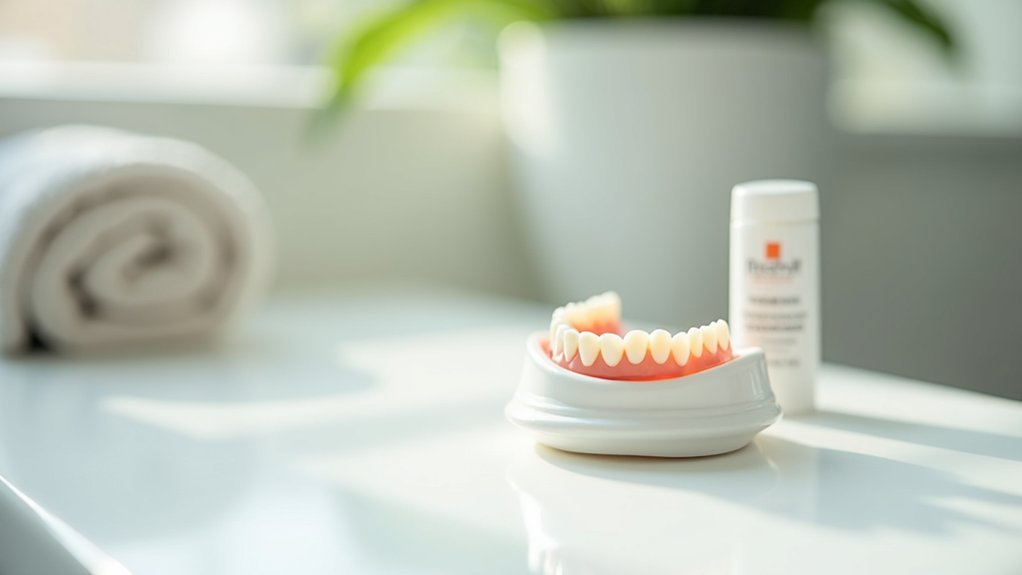

To keep your false teeth securely in place, consider using a denture adhesive for a snug fit, and clean your dentures daily with a soft-bristled brush and denture cleaner. Speak slowly at first, and choose softer foods, cutting harder items into smaller pieces to maintain stability. Remove your dentures before sleeping and store them in warm water to prevent warping. Following these steps guarantees comfort and longevity, and you can discover more tips for proper denture maintenance.
Key Takeaways
- Use a denture adhesive, preferably cream, for better fit and retention.
- Clean dentures daily with a soft-bristled toothbrush and denture cleaner to maintain a snug fit.
- Speak slowly and choose softer foods to help keep dentures securely in place.
- Avoid wearing dentures while sleeping to allow your gums to rest and prevent shape changes.
- Store dentures in lukewarm water when not in use to maintain their shape and fit.
Make Use of a Denture Adhesive
When you want to guarantee your false teeth stay securely in place, using a denture adhesive can be a game changer. Available in creams, powders, and wafers, creams offer the best fit and adhesion.
For proper application, use small dots or a narrow strip for creams, a thin layer for powders, and cut wafers to match your gum line. Powders are effective for 12 to 18 hours, especially if you experience dry mouth.
Always choose adhesives without zinc to avoid health risks. Look for the American Dental Association’s Seal of Acceptance to ascertain safety and effectiveness in keeping your dentures secure.
Clean Your Dentures Regularly
Cleaning your dentures regularly is crucial for maintaining their fit and your overall oral health.
To keep your dentures in top shape, use a specialized soft-bristled toothbrush and denture cleaner daily to remove food debris and plaque, which can lead to gum disease. Avoid regular toothpaste or abrasive tools, as they can damage the denture material.
Soak your dentures overnight in warm water or a denture cleaning solution to maintain their shape. Establishing a daily cleaning routine not only enhances the longevity of your dentures but also guarantees a snug fit, preventing any loosening that might affect your comfort.
Speak Slowly and Eat Wisely
When you first start wearing dentures, it’s important to speak slowly to help keep them in place.
Choosing softer foods and cutting harder items into smaller pieces will make eating easier and reduce pressure on your dentures.
Adjust Speaking Habits
Adjusting your speaking habits is essential for keeping false teeth securely in place. When you first wear dentures, it’s important to speak slowly to prevent them from dislodging. This helps you adjust comfortably to your new appliance.
As you gain confidence, gradually increase your speaking speed while remaining mindful of your dentures. Remember, speaking too quickly can cause dentures to become loose.
Soft Food Choices
Maintaining a stable fit for your dentures also involves making thoughtful food choices. Start with soft foods that minimize pressure on the gums and help you build comfort and confidence. Consider these options:
- Applesauce
- Yogurt
- Scrambled eggs
- Mashed potatoes
Cut food into smaller pieces to make chewing easier and distribute pressure evenly across your dentures.
Remember to chew evenly on both sides of your mouth to maintain their position. As you adjust, avoid sticky or hard foods that can dislodge your dentures or cause discomfort, focusing on softer options at first.
Chewing Techniques
As you become accustomed to wearing dentures, employing effective chewing techniques is essential for both comfort and stability.
Start with a diet of softer foods like eggs, rice, and yogurt to reduce pressure on your gum line. When you do eat harder foods, cut them into smaller, bite-sized pieces to minimize the force needed for chewing.
Chew evenly on both sides of your mouth to distribute pressure and maintain denture stability. Remember to speak slowly at first; this helps you adjust and reduces the risk of dislodging your dentures during conversation.
Take care, and you’ll find chewing becomes easier over time.
Avoid Wearing Dentures While Sleeping
Removing your dentures before sleeping is essential for allowing your gums to rest and recover.
This practice not only prevents discomfort from prolonged wear but also helps maintain the shape of your mouth by reducing continuous pressure on your gums and jawbone.
Resting Gums Overnight
To guarantee your gums stay healthy and comfortable, it’s essential to take out your dentures before bed. Resting your gums overnight promotes better oral health and prevents discomfort from prolonged contact.
Here are some tips:
- Remove dentures nightly to allow your gums and jawbone to rest.
- Store dentures in warm water to maintain proper fit and prevent drying out.
- Establish a routine for nightly removal to enhance longevity, reducing the risk of shape alteration.
- Give your gums a break to aid in recovery, minimizing the chance of sores or infections.
Prioritizing this routine benefits your overall oral health.
Preventing Mouth Shape Changes
Taking out your dentures before bed isn’t just about comfort; it also plays an important role in preventing changes to your mouth’s shape. By removing your dentures, you allow your gum tissues and jawbone to recover from pressure, vital for maintaining oral health.
Prolonged wear can lead to alterations in mouth shape, causing fit issues when you reinsert them. Establishing a nightly routine of removing your dentures reduces discomfort and minimizes the risk of irritation or infection.
This practice not only promotes better oral hygiene but also guarantees a proper fit during the day, enhancing the longevity of both your dentures and gums.
Store Dentures in Warm Water
Storing dentures in warm water is essential for maintaining their shape and fit, ensuring they remain comfortable during use.
To effectively keep dentures in place, consider these tips:
- Use lukewarm water to soak your dentures; hot water can warp them.
- Regularly check the water temperature; cooler water may lose protective benefits.
- Store dentures in warm water when not in use to prevent losing their shape.
- Proper storage contributes to the longevity of dentures, reducing the need for replacements.
Understanding Proper Denture Fit and Stability
Understanding the nuances of proper denture fit and stability is vital for ensuring comfort and functionality. A well-fitted denture prevents issues like loose dentures, which can arise from changes in your jawbone structure.
Regular routine dental visits are essential for adjustments as your mouth evolves. Additionally, dry mouth can hinder saliva production, reducing the oral moisture necessary for ideal denture stability.
To enhance fit, practice chewing techniques that distribute pressure evenly across both sides of your dentures. By focusing on these aspects, you can greatly improve your denture experience and maintain confidence in your smile.
Exploring Suction Dentures as an Alternative
For those struggling with traditional dentures, suction dentures offer a promising alternative that can greatly enhance your denture experience. Here’s what makes them a beneficial choice:
- Enhanced stability: The vacuum seal minimizes movement.
- Secure bond: Custom fittings conform to your gums for a snug fit.
- Improved retention: The suction mechanism helps keep dentures in place.
- Comfort: Even pressure distribution reduces irritation.
With suction dentures, you can speak and eat confidently, knowing they won’t slip.
If you’ve faced challenges with conventional options, consider suction dentures for a more reliable and comfortable solution.