
To stop clenching your teeth with Invisalign, identify triggers through journaling and incorporate mindfulness practices like meditation. Keep your aligners clean and remove them when eating or drinking anything other than water. Establish a consistent sleep routine and create a comfortable sleep environment. Consult your orthodontist for a tailored treatment plan and explore alternative therapies like acupuncture or chiropractic care for added relief. Discover more effective strategies to enhance your oral health and well-being.
Key Takeaways
- Identify stress triggers through journaling to better manage clenching habits while using Invisalign.
- Incorporate mindfulness practices like meditation and deep breathing to alleviate anxiety and reduce clenching.
- Schedule regular dental check-ups to monitor your aligner fit and address any clenching-related issues.
- Follow a consistent sleep routine and create a comfortable sleeping environment to minimize nighttime clenching.
- Consult your orthodontist about customized treatments or modifications to your aligners to alleviate discomfort from clenching.
Behavioral Techniques
When you’re struggling with teeth clenching, understanding your triggers can be pivotal in managing this habit effectively. Keep a journal to identify patterns linked to stress or specific times of day.
Incorporate mindfulness practices like meditation or deep breathing to help alleviate anxiety and reduce bruxism. Utilizing biofeedback devices can enhance your awareness of jaw clenching, promoting relaxation techniques.
Engage in regular physical activities, such as yoga, to lower stress levels. Finally, establish a consistent sleep routine to improve oral health and reduce nighttime clenching, making your Invisalign treatment plan more effective in achieving ideal results.
Oral Care Practices
To effectively manage clenching while using Invisalign, proper aligner maintenance is essential.
You should clean your aligners daily and follow your dentist’s guidelines for wearing them to guarantee peak results.
Additionally, scheduling regular dental check-ups will help you monitor your progress and address any issues related to clenching or discomfort.
Proper Aligner Maintenance
Maintaining proper oral care practices while using Invisalign is essential for ensuring both your aligners and your teeth remain in ideal condition.
To protect your aligners from damage and promote oral hygiene, follow these steps:
- Clean your aligners daily with a soft toothbrush and mild soap to prevent bacteria buildup.
- Always remove aligners before eating or drinking anything other than water to prevent wear and maintain effectiveness.
- Rinse aligners with lukewarm water each time you remove them, keeping them fresh and free from debris.
Regular Dental Check-ups
Regular dental check-ups play an essential role in ensuring the success of your Invisalign treatment and protecting your oral health.
During these visits, your dentist will monitor the condition of your aligners for any wear caused by teeth grinding. If bruxism requires intervention, they may recommend a custom night guard to prevent further damage and alleviate jaw pain.
Consistent evaluations help detect issues early, such as tooth wear or TMJ disorders, ensuring your treatment plan adapts to changes in clenching habits.
Aim for appointments every six months to maintain peak oral health throughout your Invisalign journey.
Lifestyle Changes
While it’s easy to overlook the impact of daily habits on teeth clenching, making intentional lifestyle changes can considerably help manage this issue.
Consider these strategies:
- Incorporate Relaxation Techniques: Engage in deep breathing, yoga, or mindfulness to lower stress levels and reduce the likelihood of teeth grinding.
- Establish a Consistent Sleep Schedule: Aim for regular sleep patterns and create a comfortable sleep environment to enhance your sleep quality.
- Reduce Caffeine and Sugar Intake: Limit these stimulants, especially before bedtime, to minimize excitement in your nervous system and manage stressors effectively.
Professional Interventions
Consulting your orthodontist is essential for addressing teeth clenching while using Invisalign.
They can create a customized treatment plan that may include a night guard for additional protection and discuss medication options to help manage your symptoms.
Regular check-ins will guarantee your aligners fit properly and adapt to your needs as your treatment progresses.
Consult Your Orthodontist
Seeking guidance from your orthodontist is essential for effectively managing teeth clenching during your Invisalign treatment. Here’s how they can help:
- Assessment: Your orthodontist will evaluate your clenching habits and any pain in the jaw to guarantee your aligners fit correctly.
- Adjustments: They can suggest modifications to your aligners or recommend additional treatments to alleviate discomfort.
- Monitoring: Regular check-ups allow for monitoring the condition of your aligners and addressing any damage caused by clenching.
Open communication about your experience can enhance your overall dental health and guarantee effective management of bruxism.
Don’t hesitate to consult your orthodontist!
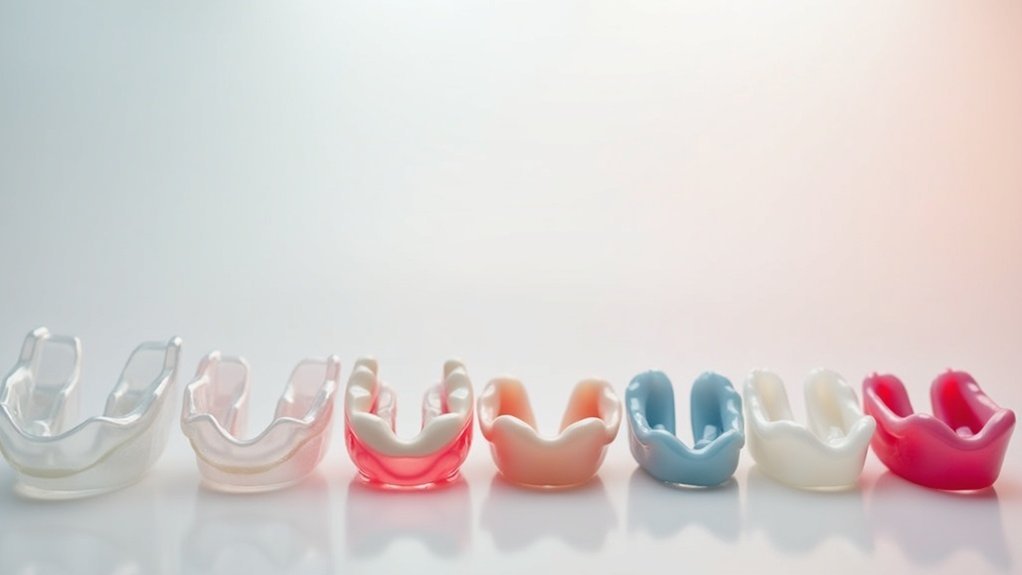
Customized Night Guard
A customized night guard can be a game-changer in managing teeth clenching, especially during your Invisalign treatment.
This tailored solution not only protects your teeth but also helps improve teeth alignment by minimizing wear on Invisalign aligners.
By creating a barrier against bruxism, the night guard absorbs grinding forces, reducing strain on your jaw muscles and alleviating symptoms of TMJ.
Through professional dental impressions, your night guard will fit securely, enhancing compliance and effectiveness.
Additionally, your dentist can adjust it as needed to accommodate any changes in alignment, addressing the underlying causes of bruxism while you progress through your treatment.
Medication Options Available
While managing teeth clenching during your Invisalign treatment, exploring medication options can provide significant relief.
Here are three effective approaches:
- Over-the-counter pain relievers: Ibuprofen or acetaminophen can alleviate discomfort and muscle tension in your jaw caused by clenching or grinding.
- Prescription medications: Muscle relaxants and anti-anxiety medications may be prescribed to reduce the frequency and intensity of bruxism.
- Botox injections: Some dental professionals recommend these to weaken jaw muscles temporarily, reducing clenching during treatment.
Consult your healthcare provider to determine the most suitable medication and dosage tailored to your individual needs.
Alternative Therapies
Alternative therapies can play a significant role in managing teeth clenching and bruxism, especially when combined with Invisalign treatment.
Acupuncture helps reduce muscle tension and stress, alleviating symptoms related to bruxism.
Chiropractic care can improve jaw alignment and promote muscle relaxation, decreasing the frequency and intensity of clenching.
Mindfulness practices, such as meditation and deep breathing, effectively lower stress levels, reducing involuntary teeth grinding.
Additionally, relaxation techniques like yoga and progressive muscle relaxation contribute to overall muscle tension reduction.
Consider integrating these alternative therapies with professional dental advice for a thorough approach to managing bruxism with Invisalign.
Long-Term Management and Prevention
Managing teeth clenching effectively requires a thorough approach that extends beyond alternative therapies.
To guarantee long-term management and prevention of bruxism, consider these strategies:
Consider these strategies for effective long-term management and prevention of bruxism.
- Incorporate stress management techniques: Use relaxation techniques to reduce anxiety, which often triggers clenching.
- Create a comfortable sleep environment: Maintain a regular sleep schedule to improve sleep quality and minimize involuntary clenching.
- Engage in regular physical activity: Exercise can help alleviate stress, promoting relaxation and reducing clenching episodes.
Additionally, regular dental check-ups guarantee any underlying issues are promptly addressed, and remember, Invisalign can help manage teeth alignment effectively.