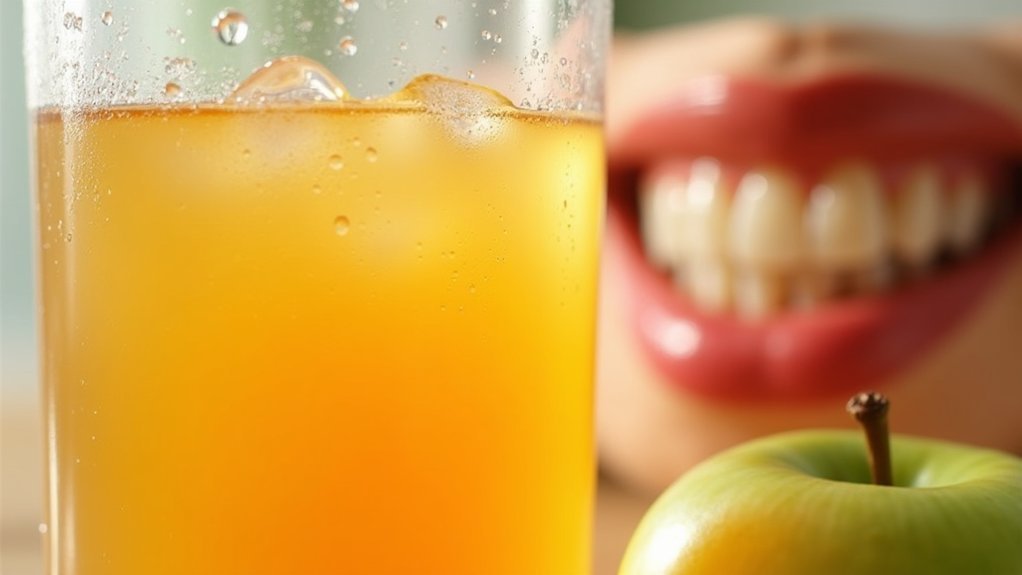

Yes, apple juice can be bad for your teeth. Its high sugar content feeds harmful bacteria, leading to tooth decay. Additionally, the acidity of apple juice can erode enamel, increasing the risk for cavities. Each sip can cause acid attacks that last up to 20 minutes, while it takes saliva longer to neutralize the effects. Limiting consumption and rinsing with water afterward can help protect your teeth. Discover more about mitigating these risks and healthier alternatives.
Key Takeaways
- Apple juice contains high sugar levels that promote tooth decay by feeding harmful bacteria.
- The acidity of apple juice can erode tooth enamel, increasing the risk of cavities.
- Each sip of apple juice can cause an acid attack lasting up to 20 minutes.
- Rinsing with water after drinking juice can help mitigate its harmful effects on teeth.
- Limiting apple juice intake and consuming whole fruits are better choices for dental health.
The Impact of Sugar on Dental Health
When you consume apple juice, you’re not just enjoying a revitalizing drink; you’re also introducing high levels of sugar into your mouth, which can considerably impact your dental health.
This sugar, comparable to that in soft drinks, promotes tooth decay by feeding harmful bacteria. Such bacteria produce acids that erode your enamel, increasing your risk for cavities and compromising your oral health.
To mitigate these effects, rinse your mouth with water after drinking juice. Moderation is essential; while apple juice can fit into a healthy diet, excessive consumption can lead to serious dental issues, particularly regarding enamel and tooth decay.
How Acidity Affects Tooth Enamel
The consumption of acidic beverages, such as apple juice, poses a considerable risk to tooth enamel.
With a pH level typically below 5.5, apple juice can initiate dental erosion by dissolving hydroxyapatite, the primary component of enamel. Each sip triggers an acid attack lasting up to 20 minutes, leading to calcium leaching from your teeth.
Saliva struggles to neutralize this acidity, often taking up to 30 minutes to restore a balanced pH. Prolonged exposure to apple juice can greatly compromise your dental health, emphasizing the need for caution when consuming acidic drinks to protect your tooth enamel.
The Risks of Regular Apple Juice Consumption
Regularly consuming apple juice can considerably impact your dental health, primarily due to its high sugar content and acidity.
The sugar in apple juice can promote tooth decay by feeding harmful bacteria that lead to cavities and gum disease. Additionally, its acidity, often below a pH of 5.5, weakens tooth enamel and contributes to dental erosion.
Studies reveal that swishing with apple juice can leach calcium from teeth, compromising enamel integrity.
To mitigate these risks, consider limiting your intake, consuming it with meals, and rinsing your mouth with water afterward to reduce acidity and sugar exposure.
Tips to Reduce Tooth Erosion From Juice
To effectively reduce tooth erosion from apple juice, it’s essential to adopt specific habits that limit acid and sugar exposure.
First, drink juice quickly instead of sipping throughout the day, as each sip prolongs acid contact with your teeth. Limit juice intake to mealtime, reducing sugar and acid exposure.
Using a straw can minimize direct contact with your teeth, protecting enamel from erosion.
After drinking apple juice, rinse your mouth with water to wash away residual sugars and acids.
Finally, avoid brushing your teeth immediately, waiting 30-60 minutes to prevent additional damage to softened enamel.
Alternatives to Apple Juice for Better Dental Health
What healthier options can you consider instead of apple juice for better dental health?
Whole fruits, like apples, provide valuable fiber and vitamins while avoiding the high sugar content and acidity of apple juices.
Low-sugar vegetable juices, particularly those from dark leafy greens, offer protective vitamins without erosive effects.
Milk is another excellent choice, rich in calcium and casein, which helps strengthen tooth enamel.
Finally, prioritize water—especially fluoridated water—as it neutralizes mouth acids and promotes hydration.
Best Practices for Oral Hygiene After Juice Consumption
After drinking apple juice, it’s essential to rinse your mouth with water to help eliminate lingering sugars and acids.
Wait at least 30 minutes before brushing your teeth to avoid damaging softened enamel.
These steps can greatly reduce the risk of tooth decay and enamel erosion.
Rinse With Water
Rinsing your mouth with water immediately after consuming apple juice is vital for maintaining oral health. This practice helps remove residual acids and sugars, markedly reducing the risk of tooth decay and enamel erosion.
Each sip of juice can trigger an acid attack lasting up to 20 minutes, making it essential to rinse right after drinking juice. Additionally, drinking juice quickly minimizes its contact time with your teeth.
To further support oral hygiene, consider chewing sugar-free gum sweetened with Xylitol after rinsing, as it stimulates saliva production, aiding in the natural protection and remineralization of your teeth.
Wait Before Brushing
When you consume apple juice, it is crucial to wait 30-60 minutes before brushing your teeth to protect your enamel. The acid in juice temporarily weakens it, and brushing immediately can exacerbate erosion. Instead, rinse your mouth with water to neutralize acids and remove sugars.
| Action | Purpose |
|---|---|
| Wait before brushing | Protects enamel from erosion |
| Rinse with water | Neutralizes acid |
| Chew sugar-free gum | Stimulates saliva production |
| Limit juice exposure | Reduces acid attack duration |
Understanding the Role of Whole Fruits in Dental Care
Whole fruits offer significant advantages over juices when it comes to dental care.
They contain more dietary fiber and essential nutrients, which support oral health by promoting saliva production and mechanically cleaning teeth.
Whole Fruits vs. Juices
While fruit juices may seem like a convenient option for hydration and nutrition, choosing whole fruits offers significant advantages for dental health.
Whole fruits provide more fiber and nutrients, helping reduce the risk of tooth decay by promoting saliva production that protects your teeth. They’ve a lower glycemic index than fruit juices, leading to less sugar exposure and a decreased risk of cavities.
Chewing whole fruits stimulates saliva flow, neutralizing acids that harm enamel. Unlike juices, whole fruits don’t coat teeth with liquid sugar, which lessens the potential for tooth erosion and supports overall oral health without added sugar concerns.
Nutritional Benefits of Fruits
Understanding the nutritional benefits of fruits is essential for maintaining ideal dental health. Whole fruits offer a wealth of vitamins, minerals, and fiber that support your overall well-being and contribute positively to oral hygiene.
Here are three key advantages:
- Saliva Production: Whole fruits stimulate saliva, which helps neutralize acids and wash away food particles.
- Plaque Removal: The fibrous texture of fruits can aid in naturally cleaning your teeth, reducing plaque buildup.
- Nutrient-Rich: Whole fruits contain antioxidants and nutrients that bolster gum health and support your immune system.
Incorporating these foods into your diet can greatly enhance dental care.
Impact on Dental Health
Fresh fruits play an essential role in maintaining dental health, particularly when compared to their juice counterparts. Whole apples, for instance, stimulate saliva production, which neutralizes acids and helps remineralize tooth enamel.
In contrast, apple juice is often high in sugar and acid, posing a risk for tooth decay and erosion. Unlike sugary drinks that can lower pH levels below 5.5, whole fruits maintain a higher pH, making them less harmful to enamel.