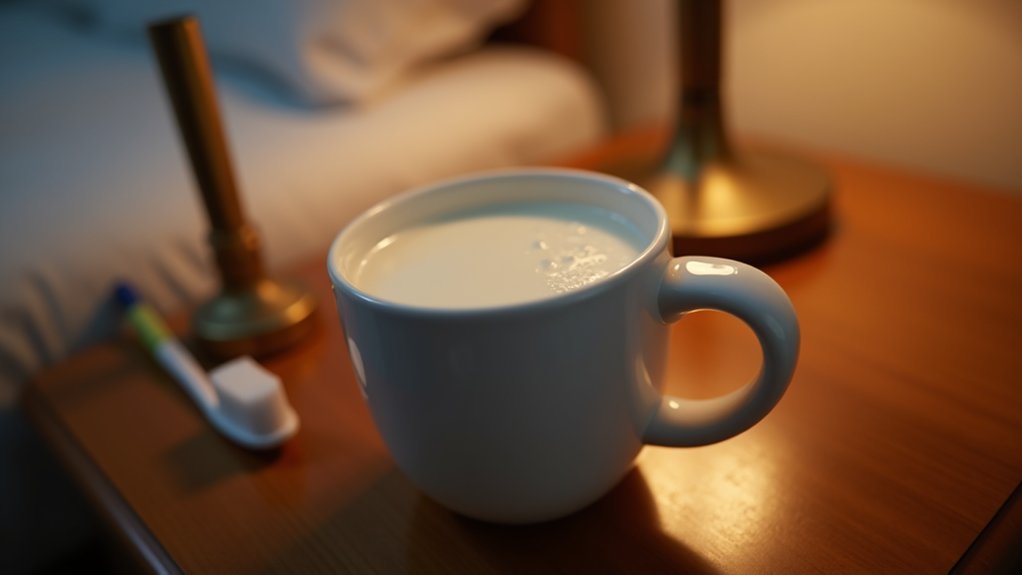

Drinking milk at night can harm your teeth. The lactose in milk feeds bacteria that produce harmful acids, increasing your risk of cavities and enamel erosion. Flavored milks, like chocolate or strawberry, are even worse due to added sugars. If you don’t practice good oral hygiene afterward, leftover milk can create tooth decay. It’s essential to maintain effective brushing habits and monitor your consumption. Discover more tips to protect your dental health effectively.
Key Takeaways
- Milk contains lactose, which can feed harmful bacteria and lead to tooth decay if consumed before bed.
- Residual milk left overnight increases the risk of enamel erosion, particularly on upper front teeth.
- Flavored milks, like chocolate and strawberry, contain added sugars that heighten the risk of cavities.
- Proper oral hygiene, including brushing after milk consumption, is essential to prevent dental issues.
- Limiting nighttime milk and opting for water can significantly reduce the risk of tooth decay in children.
The Risks of Nighttime Milk Consumption
While milk is often considered a healthy beverage, drinking it at night can pose significant risks to your dental health.
The lactose in milk feeds bacteria that produce harmful acids, leading to cavities, especially on the upper front teeth. If milk residue remains on teeth overnight, the sugars can increase the risk of enamel erosion.
Flavored milks, like chocolate or strawberry, have added sucrose, heightening this risk.
To protect your teeth, limit milk consumption to mealtimes and prioritize thorough oral hygiene after drinking before bed. By doing so, you can help prevent dental issues and maintain a healthy smile.
Understanding Baby Bottle Tooth Decay
Understanding baby bottle tooth decay is essential for maintaining your child’s dental health.
Frequent exposure to sugary liquids, especially milk, can lead to plaque buildup and cavities if proper care isn’t taken.
As a parent, you’ll want to prioritize prevention strategies and early intervention to protect your child’s teeth.
Causes of Baby Bottle Decay
Baby bottle tooth decay primarily arises when children’s teeth frequently encounter sugary liquids, such as milk, that linger around their gums during sleep. The sugars in these liquids feed bacteria, leading to plaque formation and cavities in children if not addressed. Infants and toddlers are particularly vulnerable, as their enamel is thinner. Bedtime bottles filled with milk at night create an environment for bacteria to thrive.
| Factors Contributing to Baby Bottle Decay | Impact on Dental Health |
|---|---|
| Sugary liquids | Increased plaque formation |
| Prolonged exposure | Higher risk of cavities |
| Bedtime feeding | Environment for bacteria growth |
| Thinner enamel | Greater susceptibility to decay |
| Lack of oral hygiene | Accelerated tooth decay |
Prevention Strategies for Parents
To effectively prevent baby bottle tooth decay, it’s essential for parents to adopt proactive strategies that safeguard their child’s oral health.
Here are three key prevention strategies:
- Clean your child’s teeth after milk feedings with a damp cloth to remove lactose residue.
- Limit nighttime milk consumption and opt for water in bedtime bottles to reduce sugary liquid exposure.
- Establish a feeding schedule that allows milk consumption well before bedtime to minimize pooling around teeth.
Importance of Early Intervention
Recognizing the signs of baby bottle tooth decay early can make a significant difference in your child’s oral health. Prolonged exposure to sugary liquids, like milk, can lead to bacteria growth, plaque buildup, and ultimately tooth decay.
If untreated, this decay can cause pain, infection, and even loss of baby teeth, vital for chewing and speech development. To combat this, clean your child’s teeth after nighttime feedings and schedule regular dental check-ups starting at age one.
Early intervention is essential in addressing baby bottle tooth decay, ensuring your child maintains a healthy smile and proper oral habits for the future.
How Milk Affects Dental Health
While milk is often touted for its nutritional benefits, its impact on dental health, especially when consumed at night, warrants careful consideration.
Here’s how milk affects your teeth:
- Lactose Content: The sugar in milk can feed bacteria, increasing the risk of cavities if you don’t practice dental hygiene after consuming it before bed.
- Enamel Erosion: Milk pooling around teeth can lead to acid production, risking enamel erosion and decay.
- Baby Bottle Tooth Decay: Allowing children to sleep with a bottle of milk can severely affect their upper front teeth.
Keep your dental hygiene routine strong to mitigate these risks!
Tips for Minimizing Tooth Decay
Minimizing tooth decay is essential for maintaining a healthy smile, especially for children who are more susceptible to cavities.
To protect their teeth, avoid giving milk or sugary drinks in bottles at bedtime. Clean your child’s teeth after milk feedings with a damp cloth or soft-bristled toothbrush to remove any residue.
Limit flavored milks and sugary beverages, as they contribute to dental issues. Encourage water instead of milk before bedtime to prevent sugar residue.
Establish a feeding schedule to guarantee milk is consumed well before bedtime, allowing time for effective oral hygiene practices recommended in pediatric dentistry.
Importance of Oral Hygiene Practices
Understanding the timing of milk consumption is essential for maintaining oral health, especially at night.
Coupled with effective brushing techniques and regular dental check-ups, these practices form the foundation of a strong oral hygiene routine.
Timing of Milk Consumption
When you consume milk before bedtime, it’s essential to follow proper oral hygiene practices to protect your dental health.
Milk can leave residue in your mouth that feeds bacteria, leading to cavities overnight. To minimize risks, consider these tips:
- Brush your teeth after consuming milk to remove any leftover sugars.
- Limit milk intake to mealtimes, avoiding bottles at sleep time.
- Schedule regular dental check-ups to monitor your oral health.
Effective Brushing Techniques
To maintain ideal dental health, mastering effective brushing techniques is essential, especially after consuming milk at night.
Use a soft-bristled toothbrush and fluoride toothpaste to effectively remove dental plaque and protect your enamel. Brush for at least two minutes, making certain you cover all surfaces—fronts, backs, and chewing areas of each tooth.
Ideally, brush twice daily, focusing on cleaning after meals and before bedtime to combat tooth decay. If you’re helping young children, supervise their brushing to make sure they use proper techniques.
These practices will greatly enhance their oral hygiene and reduce the risk of cavities linked to nighttime milk consumption.
Regular Dental Check-ups
Regular dental check-ups play an essential role in maintaining children’s oral health, as they allow for the early detection of potential issues like tooth decay.
These visits guarantee your child’s teeth stay healthy and cavity-free. Here are three key benefits of regular check-ups:
- Early Detection: Identify signs of tooth decay before they worsen.
- Professional Cleaning: Remove plaque buildup that can lead to cavities.
- Tailored Advice: Receive personalized guidance on oral hygiene practices and dietary choices.
When to Consult a Pediatric Dentist
Consulting a pediatric dentist is essential if your child exhibits signs of tooth sensitivity, pain, or discoloration, as these symptoms may point to underlying dental issues. It’s also vital to seek advice if your child frequently drinks milk before bed, as this can increase the risk of tooth decay. Regular check-ups can help monitor baby teeth and catch problems early. Here’s a quick reference on when to consult a pediatric dentist:
| Sign of Concern | Possible Issue | Recommended Action |
|---|---|---|
| Tooth Sensitivity | Tooth Decay | Schedule an appointment |
| Pain | Decay or Infection | Immediate consultation |
| Discoloration | Enamel Erosion | Discuss with the dentist |
| Frequent Milk Consumption | Risk of Decay | Get dietary advice |