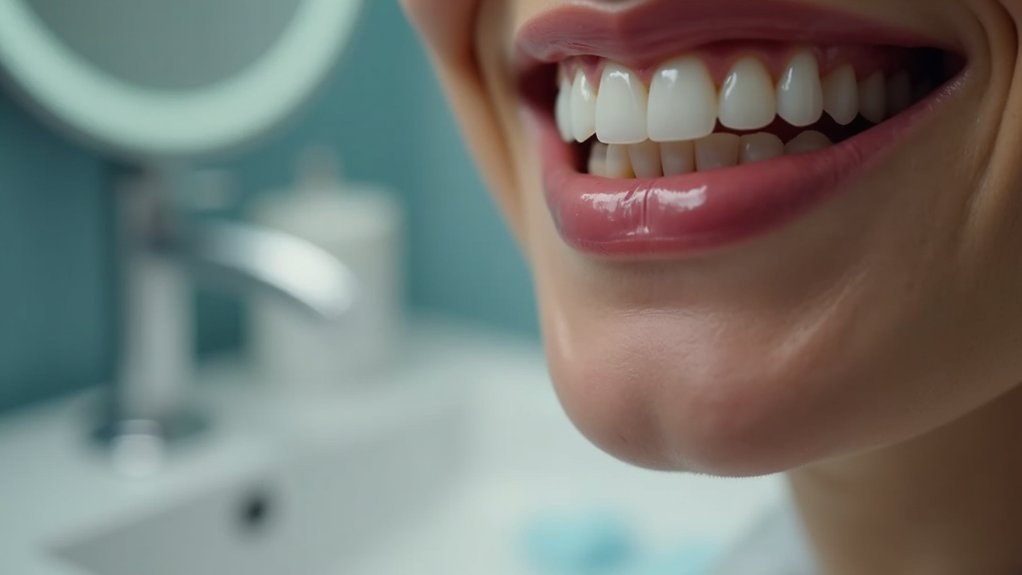

Leaving teeth whitening strips on overnight can cause several issues. You might experience increased tooth sensitivity, sharp pain when eating hot or cold foods, and gum irritation. Prolonged use can even weaken enamel and lead to uneven whitening, making some teeth appear dramatically lighter. To prevent complications, it’s important to know the proper usage of whitening strips. Discover more about how to protect your dental health and what actions to take if you’ve accidentally left them on too long.
Key Takeaways
- Prolonged exposure to whitening agents can lead to increased tooth sensitivity and sharp pain while eating.
- Gum irritation or chemical burns may occur, resulting in soreness and discomfort.
- Excessive use of whitening strips can weaken enamel, increasing the risk of cavities.
- Uneven whitening may happen, leaving some teeth significantly whiter than others.
- Rinsing with lukewarm water and avoiding hot or cold foods can help mitigate irritation if strips are left on overnight.
Potential Risks of Leaving Whitening Strips on Overnight
While it might seem convenient to leave whitening strips on overnight for enhanced results, doing so can pose significant risks to your dental health.
Prolonged exposure to whitening agents can lead to increased tooth sensitivity, causing sharp pain when consuming hot or cold foods. Gum irritation or chemical burns may also occur, resulting in soreness and potential long-term discomfort.
Prolonged exposure to whitening agents can cause tooth sensitivity and gum irritation, leading to discomfort and long-term issues.
Additionally, excessive use can weaken enamel, heightening the risk of cavities. You might experience uneven whitening, leaving some teeth dramatically whiter than others, and temporary white patches may appear on your gums.
Understanding these potential risks is essential for maintaining oral health.
What Should You Do If You Left Whitening Strips on Overnight?
If you’ve accidentally left whitening strips on overnight, the first step is to rinse your mouth thoroughly with lukewarm water to remove any residual gel.
Avoid alcohol-based mouthwash, as it may irritate sensitive gums.
Next, gently brush your teeth with fluoride toothpaste using a soft-bristled toothbrush to help remineralize your tooth enamel and reduce sensitivity.
Consider applying desensitizing gel or toothpaste containing potassium nitrate to alleviate discomfort.
For the next 24 hours, steer clear of hot, cold, or acidic foods to prevent further irritation.
If you experience severe pain or prolonged sensitivity, consult with a dentist for tailored solutions.
How to Prevent Overnight Use of Whitening Strips
To prevent accidentally leaving whitening strips on overnight, it’s essential to establish a consistent routine that includes setting reminders for yourself.
Establish a consistent routine with reminders to avoid leaving whitening strips on overnight.
Here are three effective strategies:
- Set a timer or alarm on your phone to remind you to remove the whitening strips after the recommended time of 30–60 minutes.
- Store strips visibly next to your toothbrush, creating a visual cue for both application and removal.
- Use a planner to track your whitening schedule, ensuring you follow instructions and avoid excessive exposure to whitening agents.
Signs of Damage From Prolonged Use
Prolonged use of teeth whitening strips can lead to several noticeable signs of damage that indicate you’re overdoing it. You might experience tooth sensitivity, sharp pain when consuming hot or cold foods, and gum irritation characterized by redness and soreness. Chemical burns from whitening agents can harm your gums, while enamel erosion increases cavity risk. Uneven whitening results in a blotchy appearance, and temporary white patches on the gums signal irritation from prolonged exposure. Here’s a quick reference table:
| Sign of Damage | Description | Impact on Oral Health |
|---|---|---|
| Tooth Sensitivity | Sharp pain during eating | Short-term discomfort |
| Gum Irritation | Redness and swelling | Potential gum disease |
| Enamel Erosion | Weakened tooth structure | Increased cavity risk |
| Uneven Whitening | Blotchy appearance | Aesthetic concern |
| Temporary White Patches | Fades within hours | Indicator of irritation |
When to Consult a Dental Professional
Consulting a dental professional becomes essential when you notice severe pain or prolonged sensitivity after using whitening strips overnight.
It’s vital to seek help if you experience:
- Visible gum damage, like redness or swelling, after excessive use of whitening strips.
- Persistent white spots on your teeth or uneven whitening, indicating potential enamel erosion.
- Ongoing tooth sensitivity that disrupts your daily life.
Regular dental check-ups can confirm your oral health is monitored, especially if you frequently use whitening products.
Seeking professional advice guarantees tailored solutions that prioritize both the safety and effectiveness of your dental care needs.
Best Practices for Safe Whitening Strip Use
While achieving a brighter smile with whitening strips can be tempting, following best practices is essential for safe use. Always adhere to the recommended usage times, typically 30 to 60 minutes, to minimize tooth sensitivity and gum irritation.
If you’re new to peroxide-based whitening, start with lower concentrations and gradually increase as your teeth adapt. Monitor for signs of sensitivity, and stop if discomfort occurs.
Take breaks between sessions to allow recovery, reducing enamel erosion risk. Pair whitening gel with fluoride toothpaste and maintain consistent oral care to support your overall oral health while ensuring safety and effectiveness.
Understanding the Impact on Your Oral Health
Understanding the impact of overnight teeth whitening strips on your oral health is essential for maintaining a bright smile without compromising your dental well-being.
Here are three key effects to evaluate:
- Tooth Sensitivity: Prolonged exposure can lead to sharp pain when consuming hot, cold, or sweet foods.
- Gum Irritation: Whitening strips may cause redness and soreness, risking chemical burns from peroxide.
- Enamel Erosion: Excessive use weakens enamel, increasing the risk of cavities and uneven whitening, with temporary white patches appearing on gums.
Being aware of these risks helps you make informed decisions to protect your oral health.