
Swallowing small amounts of blood after wisdom teeth extraction is generally safe and normal, as it often mixes with saliva during the first 24 hours of healing. You might notice a slight pink or red tint in your saliva, which can occur due to mild bleeding. It’s essential to monitor for signs of excessive bleeding, though. If you experience heavy bleeding or other concerning symptoms, seeking dental attention promptly is vital. There’s more to understand about post-extraction care.
Key Takeaways
- Swallowing small amounts of blood after wisdom teeth extraction is generally normal and may cause saliva to appear red or pink.
- Mild bleeding can occur for up to 24 hours; monitor the amount of blood swallowed during this time.
- If blood is bright red or you consistently soak gauze pads, it may indicate excessive bleeding requiring dental attention.
- Staying hydrated can help alleviate discomfort but avoid vigorous rinsing that could dislodge the blood clot.
- Contact your dentist if you experience heavy bleeding or increased swelling and pain, as these may signal complications.
Understanding Post-Extraction Bleeding
When you undergo wisdom teeth extraction, it’s common to experience some bleeding as part of the healing process.
For up to 24 hours post-surgery, you may notice slightly red saliva mixed with blood. To manage this, maintain pressure on the extraction site using gauze, which can help control excessive bleeding and reduce swallowing blood.
While swallowing small amounts of blood is typically not harmful, if you experience persistent or heavy bleeding, it’s crucial to contact your dentist for guidance.
Understanding these post-operative occurrences will aid in your recovery and promote a smoother healing process after your wisdom teeth extraction.
Is Swallowing Blood After Surgery Safe?
Swallowing small amounts of blood mixed with saliva after wisdom teeth extraction is part of the normal healing process.
You might notice some bleeding for up to 24 hours, which is usually not a cause for concern.
However, if you experience excessive bleeding, it’s important to seek medical help to prevent complications.
Normal Healing Process
After wisdom teeth extraction, it’s common to notice small amounts of blood mixed with saliva, and this is generally considered a normal part of the healing process. During the first 24 hours, mild bleeding is expected, and your saliva may appear red or pink. It’s important to monitor the amount of blood you’re swallowing; if bleeding persists or becomes heavy, contact your dentist. Staying hydrated by sipping water can help alleviate any discomfort associated with swallowing blood.
| Time Frame | Expected Symptoms | Action Needed |
|---|---|---|
| First 24 hours | Mild bleeding | Monitor symptoms |
| 24-48 hours | Slight discomfort | Stay hydrated |
| 48+ hours | Reduced bleeding | Continue monitoring |
| If heavy bleeding | Heavy blood in saliva | Contact dentist |
| Post-recovery | Complete healing | Follow care instructions |
When to Seek Help
While it’s normal to experience some blood in your saliva following wisdom teeth extraction, knowing when to seek help is vital for your recovery.
If you notice heavy bleeding or if the bleeding persists for more than 24 hours, contact your dentist for evaluation. Swallowing small amounts of blood is typically acceptable, but significant amounts may indicate excessive bleeding and require immediate dental attention.
It’s important to monitor for signs of dry socket, such as severe pain and a foul taste.
Maintaining hydration and adhering to post-operative care instructions can minimize complications and aid in your healing process.
Managing Bleeding After Wisdom Teeth Removal
After wisdom teeth removal, it’s normal to experience some bleeding, often mixed with saliva.
To control excessive bleeding, apply pressure with a moistened gauze pad and avoid actions that could dislodge the clot.
If bleeding continues beyond 24 hours or becomes heavy, you should contact your dentist for advice.
Normal Bleeding Expectations
It’s common to experience slight bleeding or oozing for up to 24 hours following wisdom teeth removal, often resulting in a mixture of blood and saliva. To manage this, bite down on a moistened gauze pad for 30 minutes, replacing it as needed. Avoid vigorous rinsing to protect the blood clot essential for healing.
| Bleeding Type | Action Required | Time Frame |
|---|---|---|
| Slight Bleeding | Use gauze pad | Up to 24 hours |
| Excessive Bleeding | Contact your dentist | Beyond 24 hours |
| Blood Mixed with Saliva | Normal, monitor for excess | Immediate |
| Healing Process | Follow post-op care | Ongoing |
Controlling Excessive Bleeding
Slight bleeding or oozing is typically manageable, but excessive bleeding after wisdom teeth removal requires prompt attention.
To control bleeding, follow these steps:
- Take a moistened gauze pad and bite down for 30 minutes to help form a blood clot.
- If bleeding persists, replace the gauze and apply firm pressure for another 30 minutes, avoiding talking.
- Don’t rinse your mouth or use straws for at least 24 hours post-operatively to prevent dislodging the clot.
- If excessive bleeding continues, contact your dentist or oral surgeon immediately.
Signs of Excessive Bleeding
While some bleeding is expected following wisdom teeth extraction, certain signs indicate that you may be experiencing excessive bleeding.
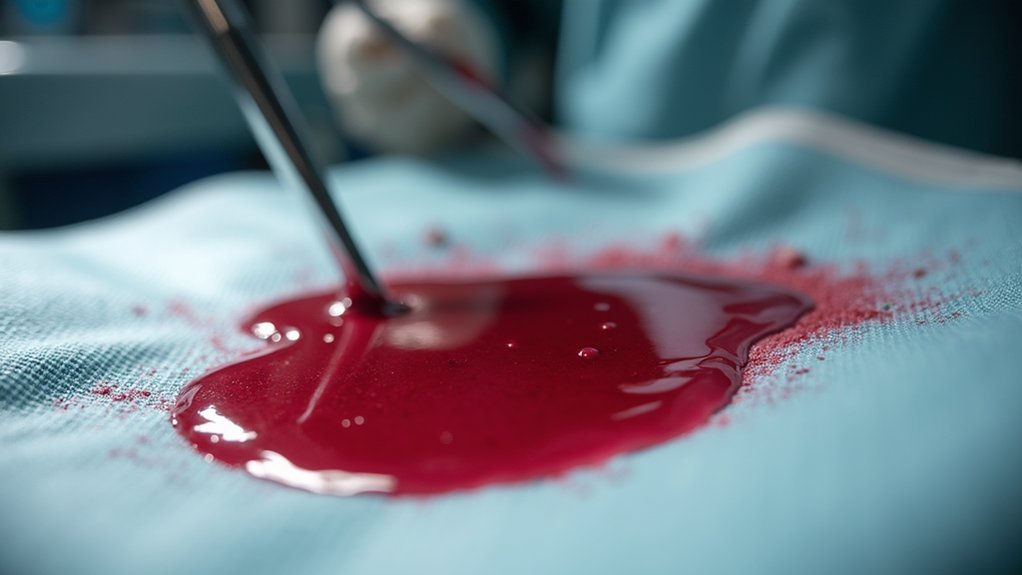
If bleeding continues beyond 24 hours or you notice bright red blood in your saliva, it’s essential to take action. Signs of excessive bleeding include consistently soaked gauze pads and an increased flow of blood from the extraction site.
Accompanying symptoms like increased swelling or pain could suggest complications, such as a dry socket. If you find it difficult to control the bleeding or swallow significant amounts of blood, contact your dental office immediately for further evaluation and guidance.
Importance of Blood Clot Formation
After wisdom teeth extraction, the formation of a blood clot plays a significant role in your recovery. A stable blood clot is important for:
- Protecting underlying bone and nerves from exposure and infection during the healing process.
- Preventing excessive bleeding and promoting efficient healing.
- Reducing the risk of developing dry socket, which causes increased pain and delays recovery.
- Ensuring critical stability in the first 24 hours, avoiding activities that disturb the clot.
Maintaining this blood clot is essential to prevent post-operative complications.
As healing progresses, the clot naturally dissolves, supporting your recovery journey.
When to Contact Your Dentist
Knowing when to contact your dentist after wisdom teeth extraction can greatly impact your recovery. If you swallow a considerable amount of blood or experience persistent bleeding lasting over 24 hours, don’t hesitate to reach out. Watch for excessive pain, swelling, or signs of infection, and consult your dentist immediately if these symptoms occur. Additionally, monitor for signs of a dry socket, like a foul taste or increased pain days post-surgery. Always prioritize your healing process by contacting your dental office with any unusual symptoms.
| Symptoms | When to Contact Dentist | Potential Issues |
|---|---|---|
| Excessive bleeding | If it lasts over 24 hours | Possible excessive bleeding |
| Severe pain | If pain increases considerably | Risk of infection |
| Increased swelling | If it worsens over time | Possible infection |
| Foul taste | If experienced days later | Dry socket |
| Unusual symptoms | Anytime you have concerns | Various complications |
Tips for a Smooth Recovery
To guarantee a smooth recovery following your wisdom teeth extraction, it’s vital to follow specific guidelines. Here are some important tips:
- Stay hydrated by drinking at least 5-6 glasses of fluids daily to prevent dehydration.
- Consume soft foods like yogurt and mashed potatoes to support healing; start with liquids.
- Avoid vigorous rinsing or spitting to prevent dislodging the blood clot, which can lead to complications.
- Follow post-operative care instructions, including pain medications and warm saltwater rinses after 24 hours, to aid recovery.