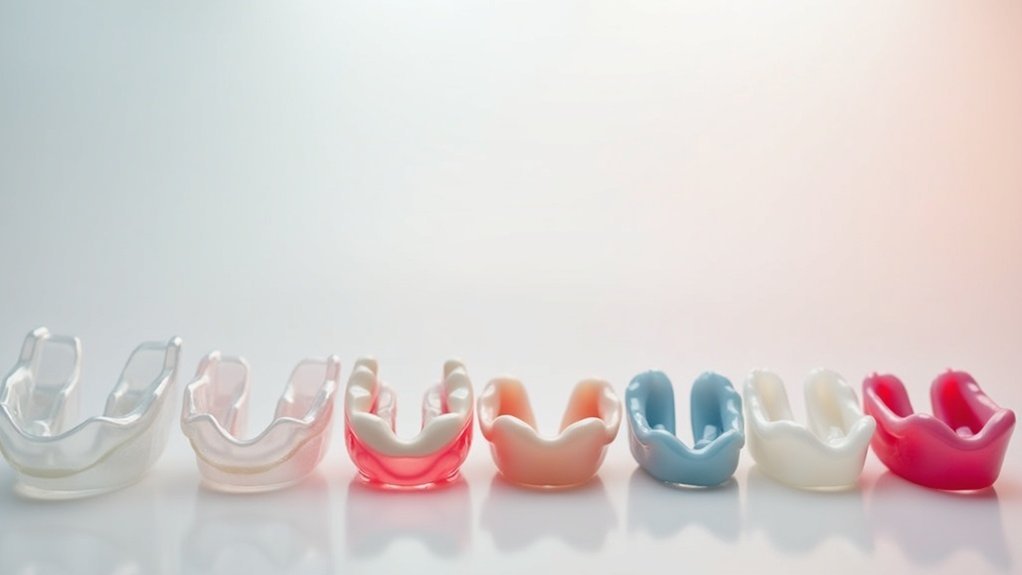

The best material for false teeth depends on your specific needs. Acrylic dentures are lightweight and affordable but wear out quickly. Porcelain offers a natural look and durability lasting 10 to 15 years, though it can chip. Metal dentures provide solid support and are thinner, but they can be more noticeable. Flexible dentures are comfortable but harder to repair. To make an informed choice, consider the advantages and disadvantages of each type for your situation.
Key Takeaways
- Acrylic Dentures: Lightweight and affordable but have a shorter lifespan of 5 to 8 years, making them less durable than other options.
- Porcelain Dentures: Offer a natural appearance and durability, lasting 10 to 15 years, but can chip and may pressure sensitive gums.
- Metal Dentures: Provide strong support and a thinner fit, ideal for partials, but are generally more expensive and noticeable in the mouth.
- Flexible Dentures: Comfortable and adaptable for sensitive gums, but harder to repair and may not offer the same strength for chewing as metal options.
- Personal Preference: Choosing the best material depends on individual needs, budget, and aesthetic preferences, balancing durability with comfort.
Overview of Denture Materials
When considering dentures, it’s essential to understand the various materials used, as each affects your comfort, durability, and appearance.
Denture materials include acrylic resin, porcelain, metal alloys, and flexible thermoplastics.
Acrylic dentures are lightweight and affordable but wear down quickly, requiring frequent replacements. In contrast, porcelain dentures provide a more natural look and enhanced durability, lasting 10 to 15 years, though they’re pricier and can chip.
Acrylic dentures are budget-friendly but less durable, while porcelain dentures offer a natural appearance and longevity at a higher cost.
Metal-based dentures offer sturdy support for chewing, ideal for partials, while flexible dentures adapt well to mouth changes but may be challenging to repair.
Each option has unique properties worth exploring for best results.
Advantages and Disadvantages of Acrylic Dentures
Although acrylic dentures are lightweight and affordable, they come with both advantages and disadvantages that you should consider.
On the plus side, they offer a natural appearance and are easy to adjust for a comfortable fit, making them suitable for individuals experiencing bone loss. They can also be repaired and modified as needed.
However, acrylic dentures are less durable than porcelain, prone to breakage, and typically last only 5 to 8 years before needing replacement. Additionally, they may require frequent replacement due to wear and staining, which can be a drawback for those seeking long-term solutions.
Advantages and Disadvantages of Porcelain Dentures
When considering porcelain dentures, you’ll appreciate their aesthetic appeal, as they mimic the look and feel of natural teeth.
Their durability offers a long lifespan, making them a worthwhile investment for many patients.
However, it’s crucial to be aware of potential health risks, especially if you have bone loss or nearby natural teeth that could be affected.
Aesthetic Appeal and Realism
Porcelain dentures offer an impressive aesthetic appeal, closely resembling the natural color and texture of real teeth, which can greatly enhance your smile.
Their ability to resist stains guarantees they maintain this visual appeal over time, unlike acrylic options that may discolor.
However, while porcelain provides a lifelike appearance, it’s important to note that its hardness can lead to chipping and may potentially damage surrounding natural teeth.
Additionally, the bonding limitations between porcelain and acrylic bases can impact the overall strength of the denture, so proper support is essential for lasting results.
Your smile deserves the best care!
Durability and Longevity
While many patients seek a balance between appearance and functionality in their dentures, durability and longevity play an essential role in the overall satisfaction with porcelain dentures.
Here are some key points to take into account:
- Porcelain dentures typically last between 10 to 15 years with proper care.
- They resist stains, maintaining aesthetic appeal longer than acrylic options.
- However, they can chip and require careful handling during use.
- The hardness may exert excess pressure on gums, which isn’t ideal for patients with bone loss.
Potential Health Risks
Although they offer aesthetic advantages, porcelain dentures come with potential health risks that users should carefully consider.
The hardness of porcelain can exert pressure on the gums, potentially causing discomfort and damage, particularly for individuals with bone loss. This pressure may displace jawbone, exacerbating existing conditions.
Additionally, if excessive force is applied during chewing, porcelain dentures can harm neighboring natural teeth.
Moreover, porcelain doesn’t bond chemically to acrylic bases, leading to bonding issues that diminish overall strength.
It’s crucial to weigh these risks against the benefits before choosing porcelain dentures for your dental restoration needs.
Advantages and Disadvantages of Metal Dentures
When contemplating dentures, metal options offer a unique set of advantages and disadvantages that can greatly impact your choice.
Here are key points to ponder:
- Durability: Metal dentures are made from strong alloys, providing long-lasting support.
- Thin Design: They’re typically thinner than acrylic options, ensuring a better fit.
- Visibility: Metal dentures may be more noticeable in your mouth, affecting your aesthetic appearance.
- Cost: Generally more expensive than acrylic dentures, which may be a concern for budget-conscious patients.
Evaluate these factors carefully to determine if metal dentures are the right choice for your needs.
Advantages and Disadvantages of Flexible Dentures
Flexible dentures offer a comfortable and adaptable solution for those seeking an alternative to traditional denture materials. Made from thermoplastic materials, they provide a lightweight fit, ideal for sensitive gums.
Their adaptability to mouth changes enhances comfort over time, and minimal tooth preparation makes them less invasive.
However, the advantages have drawbacks. Flexible dentures can be challenging to repair if damaged, and their lifespan is typically shorter than that of porcelain or metal dentures.
While flexible dentures offer comfort, they can be difficult to repair and have a shorter lifespan than traditional options.
Additionally, while they excel in comfort, they mightn’t deliver the same strength and dental support for chewing as metal-based options, limiting their suitability for some patients.
Choosing the Right Material for Your Needs
How do you choose the right material for your dentures? Selecting the best denture materials involves considering your specific needs. Here’s a guide:
- Acrylic: Budget-friendly, adjustable, but may wear out quickly.
- Porcelain: Offers a natural look and durability but can chip easily.
- Flexible: Lightweight and comfortable for partial dentures, though they mightn’t last as long.
- Metal-based: Strong and durable, ideal for significant support, but typically more expensive.
Always consider your comfort, aesthetics, and oral health, and consult a dental professional for tailored advice on your denture options.